
Most sales teams don’t lose deals because their product is bad. They lose deals because someone forgot to follow up. I’ve been in sales long enough to watch promising leads vanish, not to a competitor, but into the chaos of a shared inbox, a sticky note, or a spreadsheet that nobody updated. That’s exactly the problem the best lead management software is built to solve.
When I started tracking leads properly, with a real system instead of Outlook and gut instinct, everything changed. Response times got faster, follow-ups became consistent, and my team stopped second-guessing who had spoken to which prospect last. A study by Forrester in 2024 tracking 3,031 sales reps found that the average rep loses nearly two full days every week to administrative tasks alone. Good lead management software reclaims that time.
In this blog, I’m breaking down 15 tools that actually work for growing teams. I’ve used or tested each one, and I’ll tell you exactly what each is good for, where it falls short, and who it’s built for. If you’re comparing options right now, you’re in the right place.
What Is Lead Management Software?
Lead management software is a digital system that organizes the entire lifecycle of a prospect, from first contact to closed deal. It captures leads from web forms, emails, and other sources, tracks each lead’s status through a sales pipeline, triggers follow-up actions, and gives your team a single source of truth on every prospect.
It is not the same as a general CRM. A CRM manages the full customer relationship post-sale. Lead management software focuses specifically on moving unqualified contacts toward conversion. Many modern tools, including BIGContacts, combine both functions, making them especially practical for small businesses that need one platform to do the work of several.
Which Are the 15 Best Lead Management Software Solutions in 2026?
Here’s a snapshot of all 15 tools before we dive into the detailed reviews.
| Tool | Best For | Starting Price |
| BIGContacts | Easiest All in One CRM for Contact Management, Email Marketing & Deal Tracking | Forever free for small teams. Paid starts at $9.99/month |
| HubSpot CRM | Inbound marketing teams with room to scale | $15/seat/month |
| Zoho CRM | Workflow automation and lead nurturing | $14/user/month |
| Keap | Mobile sales teams needing real-time lead alerts | $79/month |
| Freshsales | AI-driven sales automation for growing teams | $15/user/month |
| Pipedrive | Teams that need visual pipeline management | $14/user/month |
| LeadSquared | High-volume automated lead management | $25/user/month |
| Monday Sales CRM | Highly customizable workflow-first teams | $10/seat/month |
| noCRM.io | Sales teams that prioritize third-party integrations | $21/user/month |
| Close | Inside sales and calling teams | $99/user/month |
| Salesforce | Enterprise sales workflows | $25/user/month |
| Marketo | Enterprise-level audience targeting | $159/month |
| Nimble | Social prospecting and LinkedIn lead capture | $24.90/user/month |
| EngageBay | Budget-conscious all-in-one teams | $12.74/user/month |
| Leadfeeder | B2B companies identifying anonymous website visitors | $108/month |
1. BIGContacts – Easiest All in One CRM for Contact Management, Email Marketing & Deal Tracking
I currently use BIGContacts for managing leads across multiple stages, and what keeps me coming back is how little friction there is to get something done. Setting up a pipeline, building a web form, or launching a drip campaign takes minutes, not a full afternoon.
The 360-degree contact view is one of its strongest features. Every time I open a lead record, I can see the full history: every email sent, every task logged, every note added by any team member. That context matters enormously when you’re following up on a lead that’s been in the pipeline for three weeks. The AI Pipeline Tracker adds a helpful layer on top of that view, flagging leads that have gone quiet for longer than expected so nobody has to remember to check manually.
What sets BIGContacts apart for smaller teams is the forever-free plan, it removes the usual friction of “try it before you commit.” Paid plans are among the most affordable in the category, making it a practical starting point for teams switching away from spreadsheets or outgrown tools like Outlook.
Pros:
- Stores a 360-degree view of each lead including email history, tasks, notes, and custom fields
- Supports drip email campaigns with scheduling and personalization for consistent lead nurturing
- Visual sales pipeline with drag-and-drop stages that are fully customizable
- Web form integration captures leads directly from websites into the CRM
- Task prioritization and activity reminders prevent follow-ups from being missed
- AI Pipeline Tracker flags leads that have gone quiet longer than expected
Cons:
- No downloadable or on-premise version, cloud-only deployment
- Dark mode interface is not currently available
Pricing:
Forever free for small teams. Paid starts at $9.99/month.
2. HubSpot CRM – Best for Inbound Marketing and Scalable Lead Funnels
HubSpot is best for inbound marketing workflows, content-driven lead generation, and teams that plan to scale their CRM usage over time.
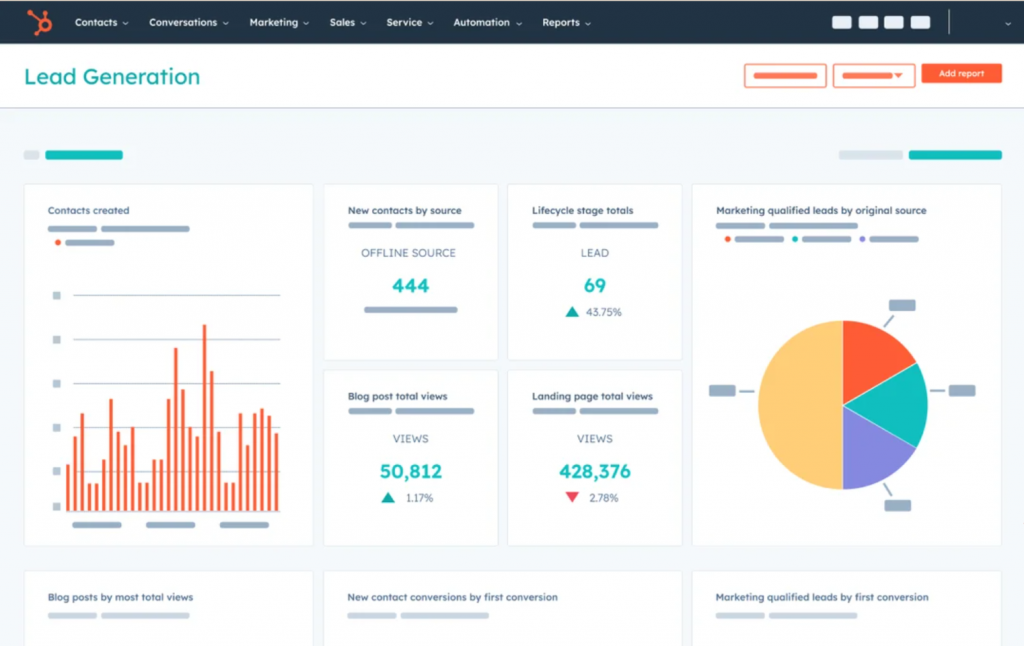
When I used HubSpot on a content-heavy marketing team, it was genuinely impressive. The CMS, the email workflows, the lead scoring, and the CRM all talked to each other without any manual syncing. Every blog visitor who converted on a form landed directly in the pipeline with source attribution already populated.
The challenge I ran into was cost. As the team grew and we needed more advanced features, the pricing jumped significantly. For teams with a dedicated RevOps or marketing operations function, HubSpot is powerful. For lean sales teams just trying to track leads and follow up, it can feel like too much tool for the job.
Pros:
- Powerful CMS for publishing content that generates and captures inbound leads
- Automated email workflows for lead nurturing with smart segmentation
- Native CRM with pipeline tracking, deal stages, and activity logging
- Deep integration with HubSpot’s full suite (Marketing Hub, Service Hub, etc.)
Cons:
- Pricing escalates sharply as team size and feature needs grow
- Some reporting features require the higher-tier paid plans to be useful
Pricing:
Starts at $15/seat/month.
3. Zoho CRM – Best for Automated Lead Nurturing Workflows
Zoho CRM is best for teams that need customizable automation rules, multi-channel lead capture, and a cost-effective alternative to enterprise CRM platforms.
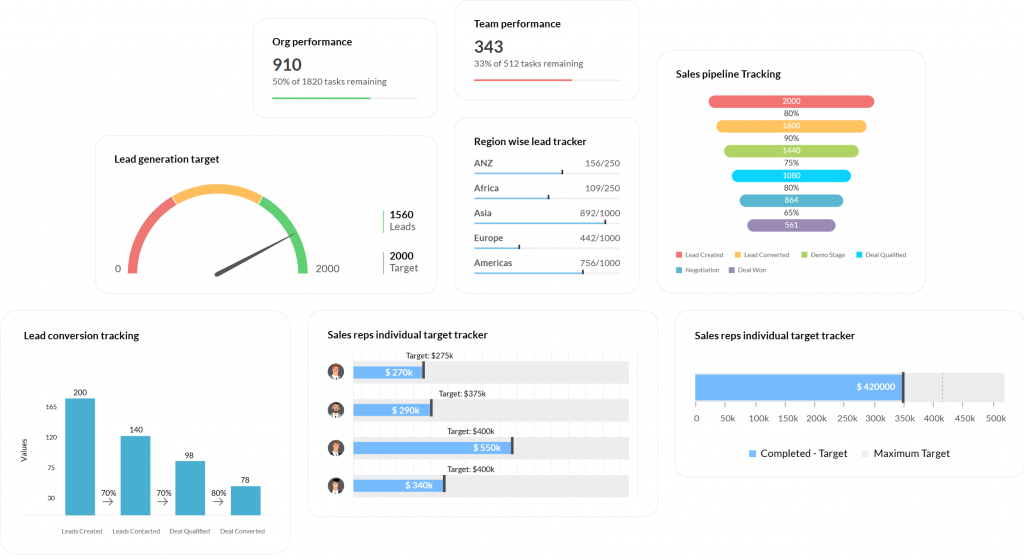
I used Zoho CRM during a period where my team was managing leads from multiple channels, web forms, trade shows, social media, and purchased lists. What impressed me was how well Zoho handled the complexity. The workflow automation let me build branching nurture sequences based on lead behavior, which meant leads from different sources got different treatment automatically.
The setup required some patience. Getting the advanced automation configured took a few days and some trial and error, especially for the more complex conditional rules. Once set up, though, the system ran itself with minimal maintenance.
Pros:
- Multi-channel lead capture from websites, social media, live chat, and offline sources
- Zia AI assistant scores leads based on engagement and routes them to the right rep
- Automation rules reduce manual work in the lead nurturing and follow-up process
- Strong customer support with fast response times for troubleshooting
Cons:
- Advanced automation setup has a notable learning curve for non-technical users
- Occasional bugs in the interface affect reliability during high-volume periods
Pricing:
Starts at $14/user/month, billed annually.
4. Keap – Best for Mobile Sales Teams Managing Leads on the Go
Keap is best for sales reps who work outside the office and need real-time lead alerts, mobile-first contact management, and appointment scheduling from a phone.
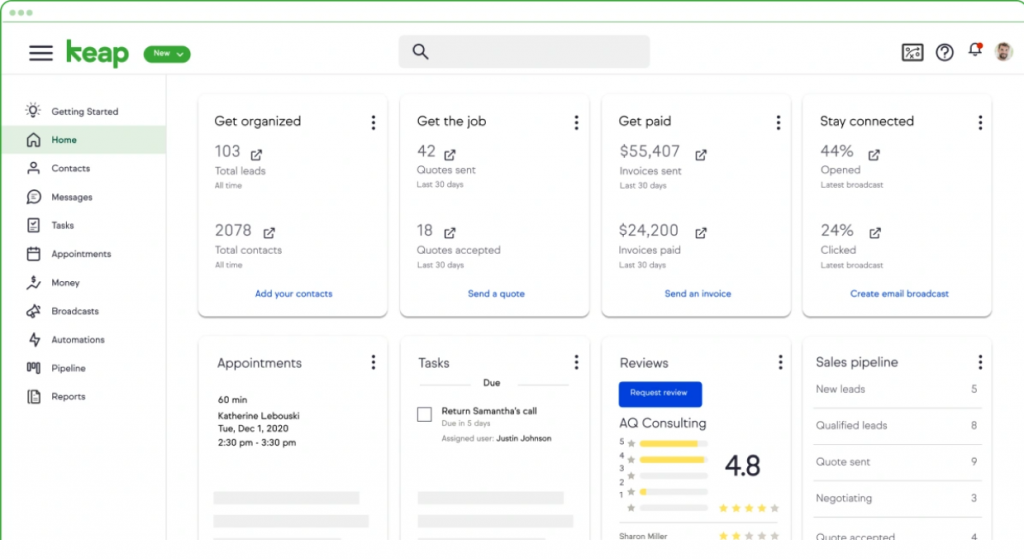
My experience with Keap was centered on its mobile app, which is one of the best in the CRM category. I was managing leads while traveling, and the app gave me instant notifications the moment a new lead came in or a contact replied to an email. I could update records, send a text, or schedule a call directly from the app without needing to open a laptop.
The pricing was the friction point for my team. At $79/month as an entry point, it’s steeper than alternatives with comparable feature sets. For solo operators or very small teams with a mobile-first workflow, it’s worth it. For teams of five or more, the cost adds up quickly.
Pros:
- Intuitive mobile app with real-time notifications for new leads and contact interactions
- Appointment scheduling lets prospects book time directly from a link
- Built-in SMS and email capabilities for multi-channel outreach from one interface
- Integrated feedback and sentiment tools for understanding client responses
Cons:
- Form and email template customization options are somewhat limited
- Reporting dashboards lack depth for teams that need granular pipeline analytics
Pricing:
Starts at $79/month.
5. Freshsales – Best for AI-Driven Sales Automation
Freshsales is best for growing teams that want AI-powered lead scoring, automatic profile enrichment, and smart next-step recommendations without the complexity of enterprise software.
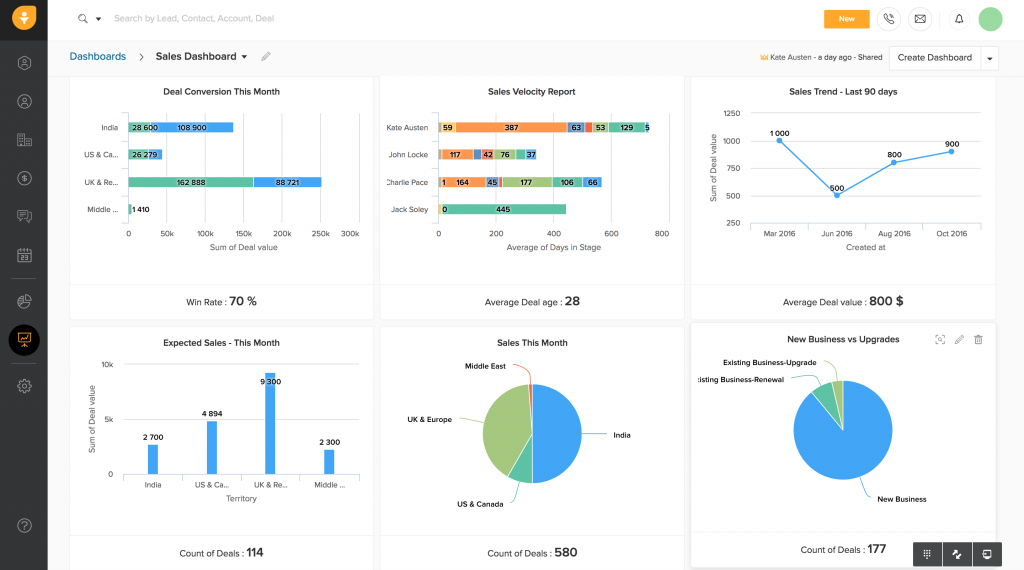
Freshsales was the first tool where I noticed AI doing useful work rather than just marketing language. The Freddy AI assistant enriched lead profiles automatically, pulling in company size, industry, and social data, which meant my reps spent less time researching and more time selling. Freddy also suggested next best actions, like “call this lead today” based on engagement signals.
The drag-and-drop pipeline was clean and fast. My only real frustration was the email template editor, which felt underpowered compared to dedicated email marketing tools. For teams that rely heavily on templated outbound, that’s a gap worth noting.
Pros:
- Freddy AI suggests next best actions and surfaces high-potential leads automatically
- Auto-profile enrichment reduces manual data entry for new contact records
- Drag-and-drop pipeline stages with intuitive visual deal management
- Integration with Freshdesk brings customer support context into lead records
Cons:
- Email template design tools are limited compared to dedicated email platforms
- Freddy AI suggestions can feel generic without sufficient historical data to learn from
Pricing:
Free plan available. Paid plans start at $15/user/month.
6. Pipedrive – Best Lead Tracking Software for Visual Pipeline Management
Pipedrive is best for sales-focused teams that want a clean, visual pipeline, fast onboarding, and activity-based selling methodology without extra complexity.
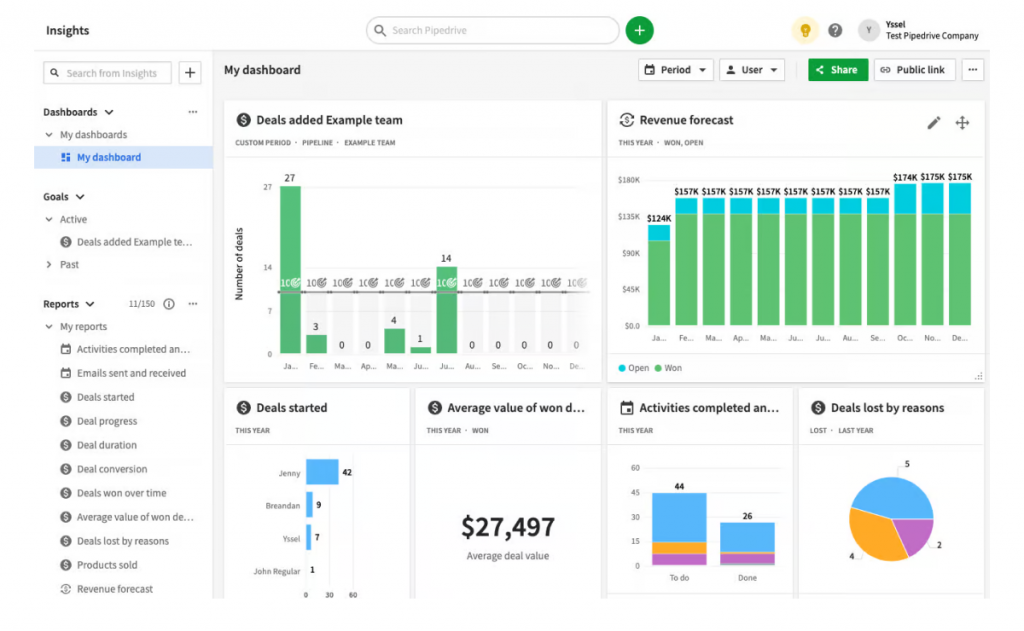
When I onboarded a new sales team onto Pipedrive, the speed of adoption stood out immediately. Within two days, everyone was using it. The drag-and-drop pipeline is intuitive enough that almost no training was needed. I set up custom stages to match our exact process, lead, contacted, demo booked, proposal sent, negotiation, closed, and reps could see exactly where every deal sat at a glance.
Pipedrive does one thing very well: keeping salespeople focused on the right activities. Where it falls short is marketing automation. If your lead nurturing relies heavily on email sequences and behavior-triggered campaigns, you’ll hit Pipedrive’s ceiling quickly and need a separate tool.
Pros:
- Drag-and-drop visual pipeline with customizable stages for any sales process
- Built-in activity reminders keep follow-ups on schedule without manual tracking
- Email and calendar integrations sync daily workflow directly to contact records
- Goal tracking and KPI dashboards give pipeline performance visibility
Cons:
- Marketing automation capabilities are limited compared to all-in-one platforms
- Lacks some enterprise-level customization options for complex sales workflows
Pricing:
Starts at $14/user/month.
7. LeadSquared – Best for High-Volume Automated Lead Management
LeadSquared is best for companies managing large lead volumes across multiple channels that need aggressive automation, fast routing, and real-time tracking to prevent revenue leakage.
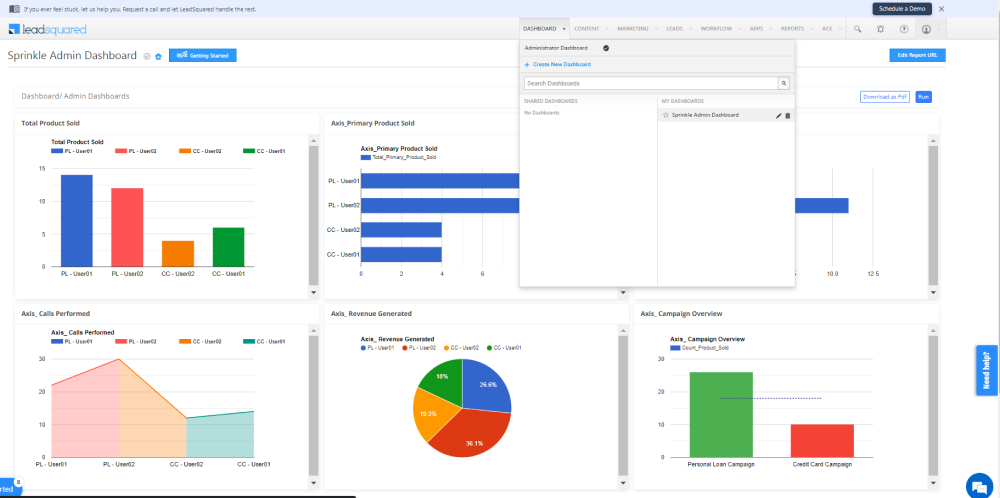
I worked with LeadSquared at a company processing hundreds of leads daily from paid ads, organic traffic, and partner referrals. The platform handled the volume without slowing down. Automated routing assigned leads to the right rep within seconds based on geography, source, and deal size, something that would have taken a full-time coordinator to manage manually.
The tool does require investment upfront. The learning curve is steeper than most alternatives, and getting full value out of the automation engine took a couple of weeks of configuration. For teams with a high enough lead volume to justify that investment, the payoff is real.
Pros:
- Lead scoring algorithms prioritize high-conversion prospects automatically
- Real-time tracking and instant notifications surface lead activity as it happens
- Automated follow-up workflows eliminate hours of manual outreach effort each week
- Customizable web forms capture lead data from multiple touchpoints
Cons:
- Some third-party integrations are not natively supported and require workarounds
- Advanced features have a significant learning curve without dedicated onboarding
Pricing:
Starts at $25/user/month.
8. Monday Sales CRM – Best for Workflow Customization
Monday Sales CRM is best for teams that want to build their own sales process structure rather than adapt to a predefined CRM workflow.
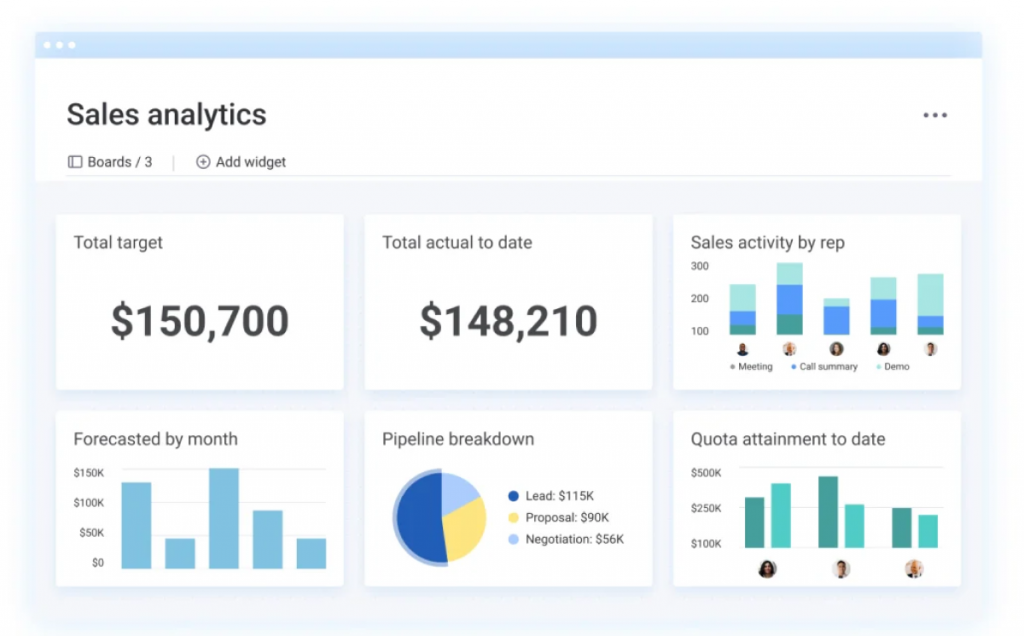
Monday Sales CRM felt less like a traditional CRM and more like a flexible workspace that I could shape entirely around my team’s process. I designed boards to track leads by source, built automations to assign and alert when leads changed stages, and connected it to Gmail and Slack so everything stayed in sync. The interface is visually clean and collaborative, which made it easy for non-sales team members to check pipeline status without needing a walkthrough.
The trade-off is that CRM-specific depth, like lead scoring or detailed communication history is less developed than dedicated sales tools. If your team already lives in Monday for project management and wants to add light lead tracking, this is a natural fit.
Pros:
- Flexible board system allows fully custom workflow and pipeline design
- Built-in automations trigger alerts, assign leads, and update stages without manual input
- Easy integration with Gmail, Outlook, and Slack for connected communication
- Works well for non-sales stakeholders who need pipeline visibility without full CRM access
Cons:
- Setting up detailed workflows from scratch requires significant initial time investment
- CRM-specific features like lead scoring and deep contact history are less advanced
Pricing:
Starts at $10/seat/month.
9. noCRM.io – Best for Third-Party Tool Integration Needs
noCRM.io is best for small sales teams that need a lightweight lead tracker with flexible API access and strong integrations rather than a full-featured CRM.
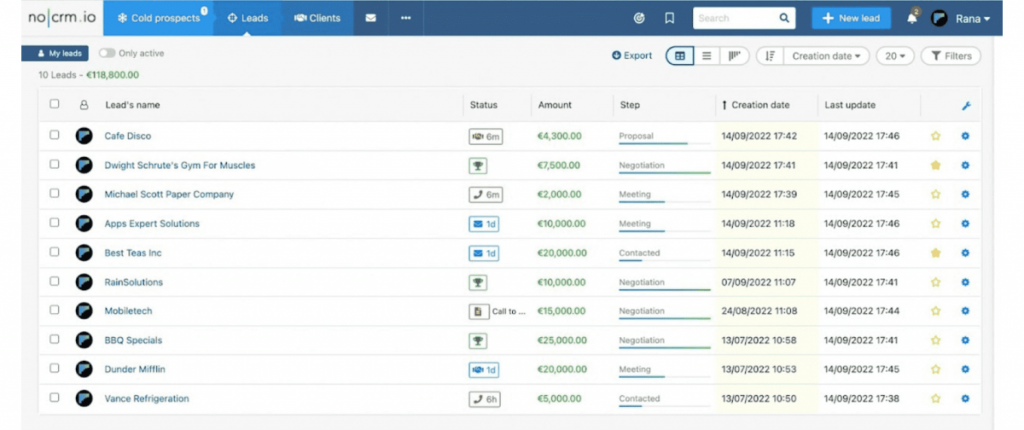
noCRM.io was the right call when I needed a system that played nicely with everything else my team already used. The API and native integrations with email, calendars, Zapier, and custom forms meant I could connect it to our existing stack without rebuilding anything. The drag-and-drop interface made it fast to onboard, and the focus on lead tracking kept things simple enough for a team that didn’t want a complex system.
The limitations showed up when I needed longer-term relationship management. noCRM.io is built for the sales process, not post-sale nurturing. Once a lead converts, the tool’s usefulness drops off noticeably.
Pros:
- Flexible API and third-party integrations expand functionality to fit existing stacks
- Drag-and-drop interface simplifies setup and speeds up team onboarding
- Real-time tracking keeps lead progress visible without manual status updates
- Customizable workflows match the tool to any sales process without coding
Cons:
- Syncing delays occasionally affect real-time visibility of lead updates
- Not the strongest choice for teams that need deep email marketing or automation
Pricing:
Starts at $21/user/month.
10. Close – Best for Inside Sales and Calling Teams
Close is best for inside sales teams where calling, texting, and emailing prospects from a single interface is the core daily workflow.
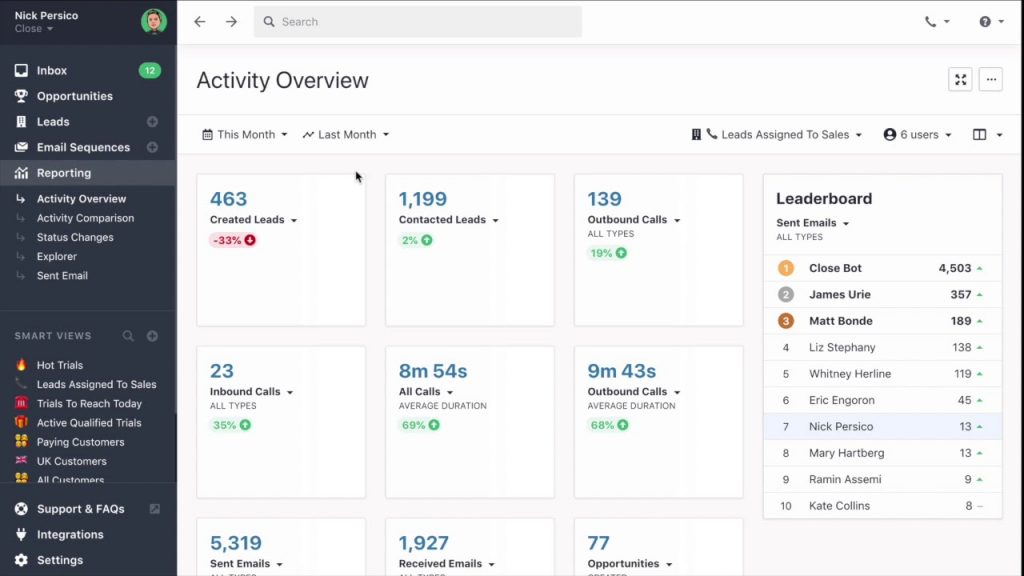
Close was built for teams that live in outreach mode. When I used it, having calling, SMS, and email all in one unified inbox removed the constant context switching that kills focus in high-activity sales environments. Every call was automatically logged, every reply tracked, and outreach sequences kept follow-ups systematic without requiring manual scheduling.
For teams doing primarily inbound work or relationship-based selling, Close may feel over-engineered. Its pricing also puts it out of reach for very small teams with limited budgets.
Pros:
- Built-in calling, SMS, and email reduce tool-switching during active outreach
- Automated outreach sequences manage follow-up cadences without manual effort
- Unified inbox consolidates all communications with each lead in one view
- Pipeline tracking is rep-focused and designed specifically for sales-heavy workflows
Cons:
- Limited marketing automation features for lead nurturing beyond direct outreach
- Less suited for inbound or relationship-driven sales motions
Pricing:
Starts at $99/user/month.
11. Salesforce – Best for Enterprise Sales Workflows
Salesforce is best for large organizations with complex, multi-stage sales processes that require deep customization, AI-powered forecasting, and an extensive integration ecosystem.
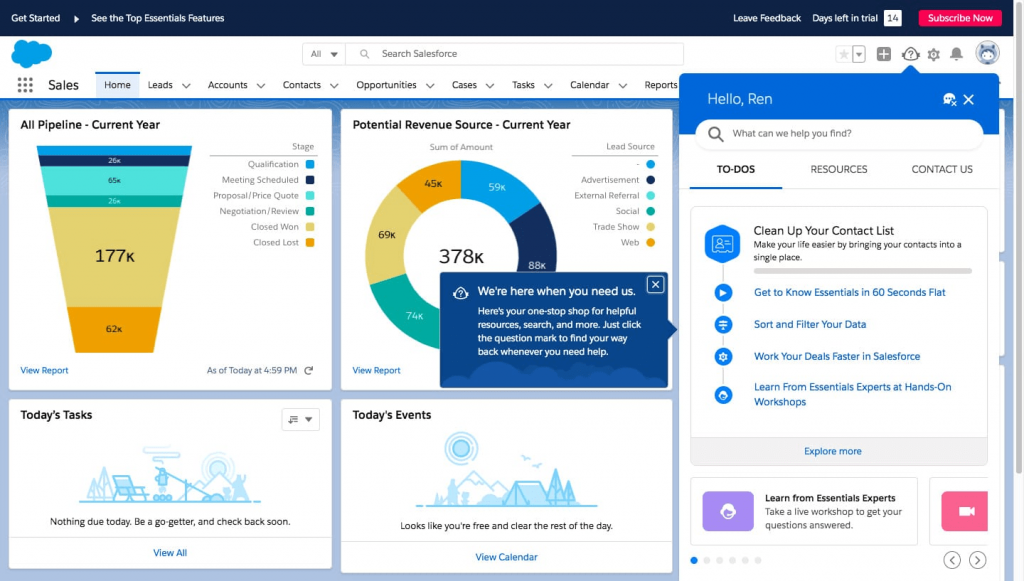
Salesforce was the backbone of the largest sales team I ever worked with. I built custom dashboards, configured Einstein AI lead scoring, and set up automation rules across a multi-stage funnel. The app marketplace was unmatched, there was a certified integration for every tool we used, from billing to marketing automation to contract management.
The honest caveat: Salesforce is not built for small teams. The learning curve is steep, the admin overhead is real, and the pricing at scale is significant. Teams that don’t have a dedicated Salesforce admin typically underuse what they’re paying for.
Pros:
- Highly customizable modules adapt to virtually any enterprise sales workflow
- Salesforce Einstein AI surfaces predictive lead scores and next-best-action suggestions
- Detailed custom dashboards and reports provide full pipeline and revenue visibility
- Massive app marketplace with integrations for almost every business tool
Cons:
- Resource-intensive setup and maintenance best suited for large teams with IT support
- Pricing becomes substantial at scale and may be excessive for SMB budgets
Pricing:
Starts at $25/user/month.
12. Marketo – Best Lead Scoring Software for Enterprise Audience Targeting
Marketo is best for enterprise marketing and sales teams running multi-touch campaigns that require precise audience segmentation, behavioral scoring, and Adobe ecosystem integration.
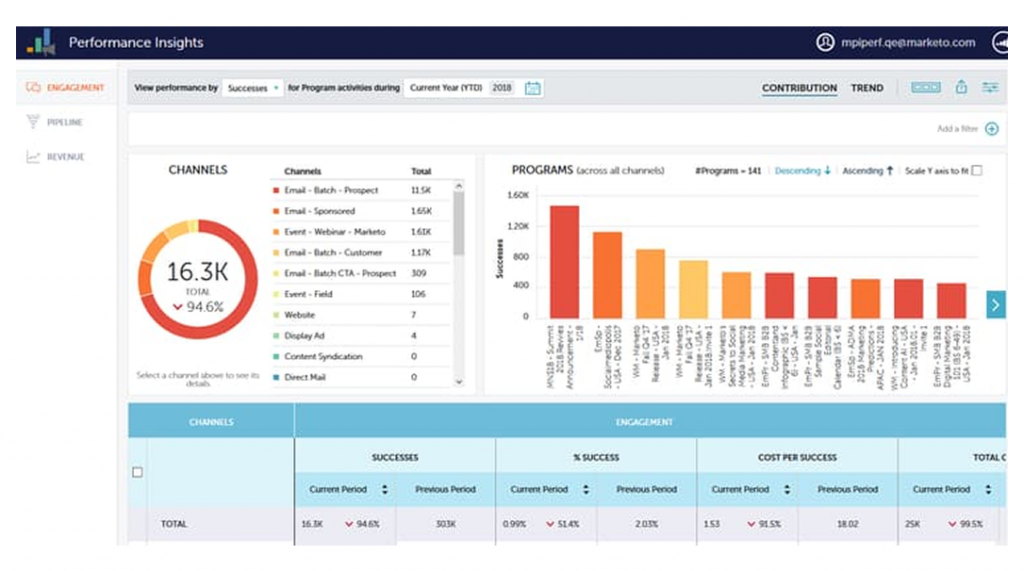
Marketo was the tool I reached for when precision mattered most. I segmented audiences by behavior, demographics, and engagement history to build campaigns where every message was relevant to the recipient’s exact stage and interest. Retargeted ads, webinar follow-ups, and personalized email sequences all ran from the same platform with consistent data flowing between them.
The complexity is real. Integrating Marketo with third-party tools required technical support, and the email deliverability challenges during large campaigns needed active monitoring. This is a tool for mature marketing operations teams, not a first CRM.
Pros:
- Behavioral lead scoring and nurturing handles complex, long sales cycles effectively
- Dynamic content personalizes messages based on lead profile and engagement history
- Native Adobe integration connects marketing and design workflows seamlessly
- Detailed engagement metrics give marketing and sales full campaign visibility
Cons:
- Third-party integrations often require technical support to configure properly
- Email deliverability issues can emerge during large-scale campaign sends
Pricing:
Starts at $159/month.
13. Nimble – Best CRM for Lead Management via Social Prospecting
Nimble is best for sales reps and small teams where LinkedIn and social media engagement are primary lead sources, and contact enrichment from social profiles is a daily need.
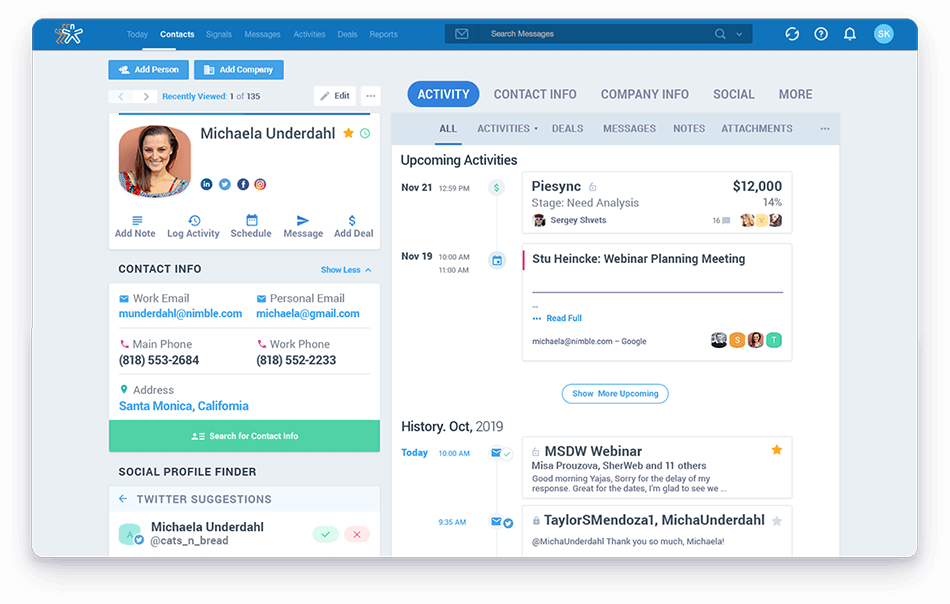
Nimble changed how I sourced and managed leads from LinkedIn. The browser extension let me capture a contact directly from a LinkedIn profile, and within seconds the record was enriched with their company, role, email, and social activity. The daily dashboard gave me timely reminders for who to reach out to and when, which made outreach feel proactive rather than reactive.
Nimble is lightweight by design. It’s not the tool for teams with complex multi-stage pipelines or heavy automation requirements. For solopreneurs and small teams where relationship-building through social channels is the primary motion, it’s a strong fit.
Pros:
- Browser extension captures and enriches leads from LinkedIn and other social networks
- Automatic contact enrichment pulls social data to build fuller lead profiles
- Daily outreach dashboard prioritizes key follow-ups and relationship touchpoints
- Clean integration with Office 365 and Google Workspace for connected workflows
Cons:
- Reporting and analytics features are basic compared to dedicated CRM platforms
- Pipeline management depth is limited for teams with complex sales stages
Pricing: Starts at $24.90/user/month.
14. EngageBay – Best Budget-Friendly All-in-One Lead Management Tool
EngageBay is best for budget-conscious small businesses that need marketing, sales, and support functionality in a single affordable platform without choosing between feature sets.
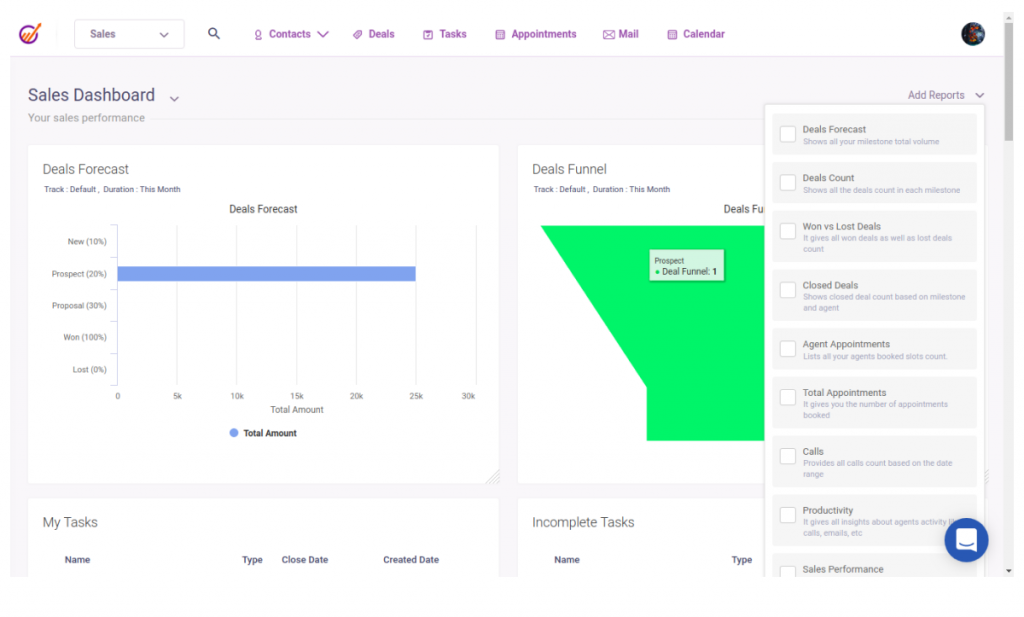
EngageBay was the right call for a team I worked with that had a tight budget but needed more than just lead tracking, they needed email campaigns, landing pages, and a help desk all from one system. EngageBay delivered that combination at a price point that didn’t require a business case to justify. The platform isn’t as polished as other CRMs, but for a team that needs breadth over depth, it covered the essentials well.
The trade-off is feature depth. Advanced automation, detailed reporting, and complex segmentation all hit ceilings faster than they do in category specialists. For teams with straightforward lead-to-close workflows, that’s rarely a problem.
Pros:
- Combines CRM, email marketing, landing pages, and help desk in one affordable platform
- Free plan covers core features for very small teams with basic lead management needs
- Email automation and drip campaigns for systematic lead nurturing
- Contact management with tagging, segmentation, and activity tracking
Cons:
- Advanced automation features have limitations compared to dedicated marketing platforms
- UI design and polish feel less refined than higher-priced competitors
Pricing:
Starts at $12.74/user/month.
15. Leadfeeder – Best Lead Distribution Software for B2B Visitor Identification
Leadfeeder is best for B2B teams that want to identify companies visiting their website even when those visitors don’t fill out a form, turning anonymous traffic into actionable lead intelligence.
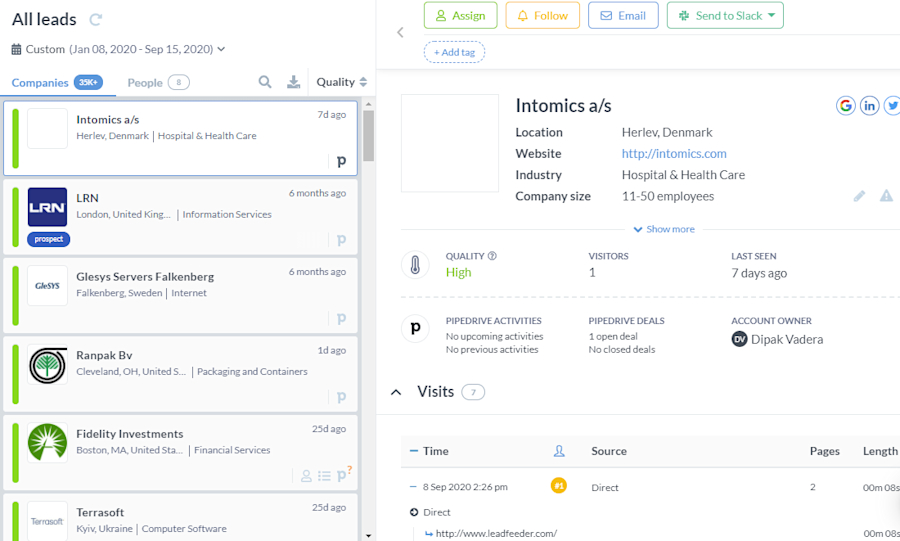
Leadfeeder changed how I thought about inbound lead generation. Instead of waiting for a form submission, I could see which companies had visited our pricing page, how many times they’d returned, and which content they engaged with, all without the visitor doing anything. That context made my outreach far more targeted and timely.
The data isn’t perfect. Some company identifications required validation before outreach, and advanced filter setup took some experimentation. But for B2B teams investing in content and SEO, the ability to see which companies are researching you is valuable.
Pros:
- Identifies companies visiting your website even without form submissions
- Detailed visitor profiles show page views, session duration, and content engagement
- Automatic alerts notify reps when high-intent leads revisit the site
- Analytics highlight which content performs best at driving qualified interest
Cons:
- Lead data accuracy requires periodic validation before outreach
- Advanced filter and segment setup has a learning curve during initial configuration
Pricing:
Starts at $108/month.
Evaluation Criteria
The tools in this list were evaluated using a consistent, unbiased framework. I applied the same six criteria to every option so the reviews reflect real-world utility rather than feature count or brand recognition.
- User Reviews and Ratings: I looked at direct feedback from verified users on platforms like G2 and Capterra. Real ratings from practitioners, not marketing pages, shaped my understanding of where each tool genuinely delivers and where it frustrates.
- Essential Features and Functionality: I evaluated each tool based on how well it handles the core lead management workflow: capture, scoring, nurturing, pipeline tracking, and reporting. A long feature list means nothing if the critical features are buried or poorly implemented.
- Ease of Use: I assessed the learning curve, onboarding experience, and day-to-day usability. For small business teams without a dedicated CRM admin, a tool that’s hard to use is a tool that doesn’t get used.
- Customer Support: I looked at how each tool supports users through setup, troubleshooting, and ongoing questions, including response time, availability of help documentation, and whether live support is accessible on lower-tier plans.
- Value for Money: I compared what each tool delivers at its entry price point relative to what you’d pay for equivalent functionality elsewhere. This was especially important for tools that charge per seat, where costs can compound quickly as a team grows.
- Personal Experience and Expert Opinion: My hands-on time with each platform informed the descriptions and pros/cons throughout this list. Where my direct experience was limited, I cross-referenced opinions from sales practitioners in community forums and industry discussions.
My Top 3 Picks for the Best Lead Management Software
After testing all 15 tools, these three consistently stood out, not because they have the most features, but because they deliver real value for the teams most likely reading this.
1. BIGContacts
BIGContacts is my top pick for businesses and growing sales teams that want everything in one place without the complexity or cost of enterprise software. The combination of visual pipeline management, drip email campaigns, web form integration, and a 360-degree contact view makes it a practical all-rounder. BIGContacts by ProProfs is a simple, affordable CRM built with contact management, email marketing, task automation, and sales pipeline tracking in one place.
2. Pipedrive
Pipedrive earns the second spot for teams where the sales pipeline is the center of gravity. If your team’s primary job is moving deals forward and staying on top of follow-ups, Pipedrive’s visual interface and activity-based selling methodology keep reps focused on the right actions every day. It’s fast to set up, easy to adopt, and does its core job better than most.
3. Freshsales
Freshsales rounds out the top three for teams ready to bring AI into their lead management workflow without the overhead of enterprise tools. The Freddy AI assistant, automatic profile enrichment, and clean drag-and-drop pipeline make it a strong choice for growing teams that want smarter automation without a steep learning curve.
Why Does Your Business Need Lead Management Software?
Without a dedicated system, leads fall through the cracks at every stage – during capture, during follow-up, and during handoff between team members.
Managing sales leads manually works when you have 20 prospects. It breaks down fast when you have 200. Here’s what lead management software solves directly:
- Leads Captured But Never Followed Up: Automated reminders and drip sequences ensure no prospect is forgotten
- No Pipeline Visibility: Visual Kanban-style pipelines show exactly where every lead stands
- Team Coordination Failures: Shared access means two reps never contact the same prospect unaware
- Disconnected Email Outreach: Email sync ties every conversation to the contact record automatically
- No Way To Prioritize Leads: Scoring and tagging surface the hottest prospects first
- Dirty, Duplicate Data: Deduplication and field validation keep your contact database clean
According to a study by Salesforce in 2026, 87% of sales organizations now use some form of AI in their lead and sales workflows, a clear signal that the category has matured beyond simple contact lists into intelligent, automated systems.
Stop Losing Leads and Start Managing Them With the Right Software
Managing leads well isn’t about having the most sophisticated software. It’s about having a system that your team will actually use, one that makes it easier to follow up, easier to track conversations, and easier to know which prospect deserves your attention today.
The best lead management software for your team is the one that fits your current workflow, costs what you can justify, and takes less than a day to get running. Start with the two or three features that matter most to you, pipeline visibility, follow-up automation, or email tracking, and let those guide your decision.
For small and growing teams looking for a straightforward starting point, BIGContacts by ProProfs covers all the fundamentals like contact management, pipeline tracking, drip email campaigns, and web form integration, at a price that makes sense for teams under 50 people. The forever-free plan means you can validate fit before committing.
Frequently Asked Questions
What is the best lead management software for small businesses?
The best lead management software for small businesses combines affordability, ease of setup, and core features like pipeline tracking, email follow-ups, and lead capture. Tools like BIGContacts, Pipedrive, and EngageBay consistently serve small teams well without requiring technical setup or large per-seat budgets.
What is the difference between lead management software and a CRM?
Lead management software focuses specifically on moving prospects through a sales funnel from capture to conversion. A CRM manages the broader customer relationship including post-sale interactions, support history, and retention. Many modern tools like BIGContacts combine both functions in a single platform.
How does lead scoring work in lead management software?
Lead scoring assigns a numerical value to each prospect based on factors like engagement activity, demographics, and behavior. Higher scores indicate more sales-ready leads. The system prioritizes those contacts in your pipeline so your team focuses effort on the prospects most likely to convert.
Can lead management software integrate with email tools like mailchimp?
Most lead management software supports integration with email marketing tools either natively or through Zapier. BIGContacts integrates with Mailchimp, allowing contact data and campaign activity to stay synchronized between platforms without manual exports.
What is the best lead tracking software with CRM integration?
Freshsales, Zoho CRM, and BIGContacts are strong options for lead tracking with built-in CRM functionality. They log every contact interaction, sync email and calendar activity, and provide full pipeline visibility in one interface, eliminating the need for a separate tracking tool.
Is there free lead management software available?
Yes. BIGContacts offers a forever-free plan for small teams. HubSpot CRM and Freshsales also have free tiers that cover basic pipeline tracking and contact management. Free plans work well for teams with a small number of active leads and straightforward workflows.
What is the best sales management software for teams under 25 people?
For teams under 25 people, the best options are tools that require minimal IT involvement and deliver value quickly. BIGContacts, Pipedrive, and noCRM.io are consistently rated highly for ease of use, fast setup, and practical features at a small-team price point.
How does lead distribution software work?
Lead distribution software automatically routes incoming leads to the right sales rep based on predefined rules, geography, deal size, source, or rep availability. Lead Capsule and LeadSquared are purpose-built for this use case. Most CRM platforms like Zoho and Salesforce also include routing rules in their automation features.
What features should I look for in the best lead scoring software?
Look for behavioral scoring (based on email opens, page visits, and form submissions), demographic scoring (company size, industry, job title), and automatic routing of high-score leads to the right rep. The best lead scoring software updates scores in real time and integrates those scores directly into your pipeline view.
How long does it take to set up lead management software?
For most small business tools, setup takes one to three days, importing contacts, configuring pipeline stages, setting up web forms, and connecting email. Enterprise platforms like Salesforce and Marketo can take weeks to configure properly. BIGContacts and Pipedrive are typically operational within hours of signup.
What is the best CRM for lead management for real estate teams?
Real estate teams benefit from tools that handle pending leads, follow-up checklists, and multiple client types simultaneously. BIGContacts, Keap, and Follow Up Boss are commonly used in real estate for their flexibility in managing buyer and seller leads with custom tags and automated touchpoints.
How do I migrate leads from excel to lead management software?
Most modern lead management tools support CSV import from Excel. The process involves exporting your spreadsheet as a CSV file, mapping columns to the correct contact fields in the CRM, and running an import. Tools like BIGContacts, Pipedrive, and Zoho CRM have guided import wizards that reduce formatting errors during migration.
FREE. All Features. FOREVER!
Try our Forever FREE account with all premium features!