
A CRM for electrical contractors is a contact and sales management tool that helps you organize leads, track quotes, and automate follow-ups so no job opportunity slips through the cracks.
Chasing invoices, forgetting to follow up on quotes, or losing a big commercial job because someone dropped the ball on a callback, if any of that sounds familiar, you already know the pain. Running an electrical contracting business means you’re constantly juggling job sites, crews, customers, and leads all at once. What holds most electrical businesses back isn’t the lack of work; it’s the lack of a system to manage it.
In this blog, I’ll share some trustworthy CRM options like BIGContacts and seven others that I’ve personally used over the past two years for importing contacts, setting up pipelines, and running follow-up sequences. Let’s get started!
What Is a CRM for Electrical Contractors?
A CRM (Customer Relationship Management) system for electrical contractors is a tool that helps centralize your contacts, track every lead and quote, log all communication history, and automate follow-up tasks so your sales process runs consistently even when you’re on a job site.
Unlike field service software that handles scheduling and dispatch, an electrician CRM is focused on the relationship and sales side of your business. Think of it as the system that wins jobs, not just manages them.
Why Do Electrical Contractors Struggle Without a CRM?
Most electricians and home service business owners manage their contacts and leads the same way — a mix of spreadsheets, email inboxes, and memory. Here’s what that actually costs:
- Quotes go out and never get followed up on because there’s no reminder system
- New leads from website inquiries get lost in an email thread
- Team members have no shared visibility into who contacted which customer last
- Seasonal marketing campaigns never happen because the contact list is a mess
- Repeat business opportunities are missed because there’s no record of past jobs or conversations
A dedicated CRM for electrical business owners solves all of these problems with one organized system.
Which Are the Top 8 CRM Tools for Electrical Contractors?
Here’s a quick-reference comparison of all tools covered in this guide.
| Tool | Best For | Pricing |
|---|---|---|
| BIGContacts | Contact Management & Email Marketing | Free for growing teams. Paid plan starts at $9.99/month |
| Jobber | Field operations + scheduling | Starts at $49/month |
| HubSpot CRM | Lead tracking | Starts at $15/user/month |
| ServiceTitan | Large electrical contractor businesses | Custom pricing |
| Pipedrive | Sales pipeline management | Starts at $14/user/month |
| Zoho CRM | Budget-friendly all-in-one | Starts at $14/user/month |
| BuildOps | Commercial electrical contractors | Custom pricing |
| Housecall Pro | Residential service businesses | Starts at $49/month |
1. BIGContacts – Best for Contact Management & Email Marketing for Growing Businesses
BIGContacts is a contact management and sales CRM built for growing businesses that need organized lead tracking, automated follow-ups, and email integration. It gives you everything you need to manage contacts, schedule follow-ups, send emails, and track your sales pipeline, without making you feel like you need a degree to use it.
I currently use BIGContacts to manage my contractor outreach. The moment I log in, I can see exactly who I need to call, what stage each prospect is in, and which follow-ups are overdue. For an electrician CRM, that kind of visibility is everything.
What makes BIGContacts especially useful as a CRM for electrical business owners is the robust automation. I set up automated follow-up sequences for leads who’ve requested quotes, and the system emails them on my behalf while I’m out on a job. The pipeline stages are fully customizable. For a growing electrical contracting team, this alone saves hours every week.
Pros:
- Fully customizable sales pipeline to match how electrical contractors manage their quote-to-close process
- Built-in email automation sends follow-up sequences without any manual effort
- Clean, clutter-free interface that requires no formal training to use
- Contact tagging and segmentation to separate residential, commercial, and B2B contractor leads
- Integrates with Outlook and Gmail, so all email communication is automatically logged against each contact
Cons:
- No downloadable or on-premise version
- No dedicated account manager for the free plan, unlike the paid version
Pricing:
Free for growing teams. Paid plan starts at $9.99/month
2. Jobber – Best for Field Operations and Job Scheduling
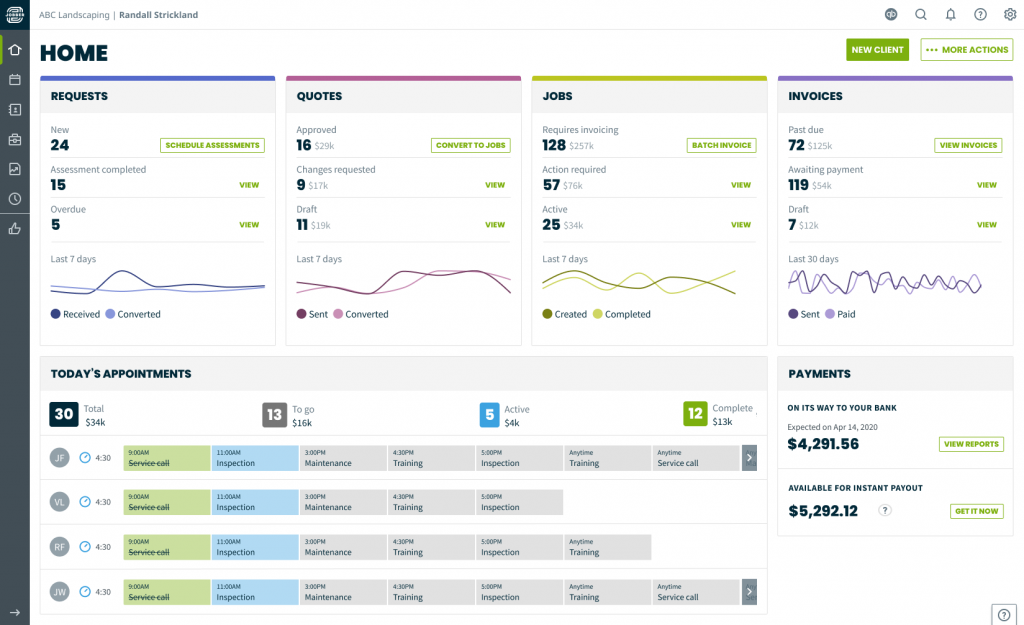
Image source: Cube
Jobber is a field service management platform for home service contractors that handles job scheduling, crew dispatch, client communication, and payment collection in one place.
Where I eventually ran into trouble with Jobber was on the sales and outreach side. It’s a strong field service management platform, but as a CRM for electrical contractors focused on relationship-building and lead nurturing, it falls short. There’s no real email campaign tool, and the contact management is more reactive than proactive.
If your main priority is streamlining job scheduling, dispatching, and invoicing for a residential electrical or plumbing business, Jobber is excellent. But if you’re actively trying to grow through B2B partnerships or commercial outreach, you’ll likely need a separate CRM for electricians running alongside it.
Pros:
- Industry-leading job scheduling and dispatch tools built specifically for home service contractors
- Client Hub allows customers to approve quotes and pay invoices online
- Automated appointment reminders reduce no-shows significantly
- Solid reporting on job completion rates, revenue, and technician performance
Cons:
- No email marketing or lead nurturing tools; you cannot run follow-up campaigns from Jobber
- Pricing increases steeply as you add more team members and features
Pricing:
Starts at $49/month.
3. HubSpot CRM – Best for Lead tracking
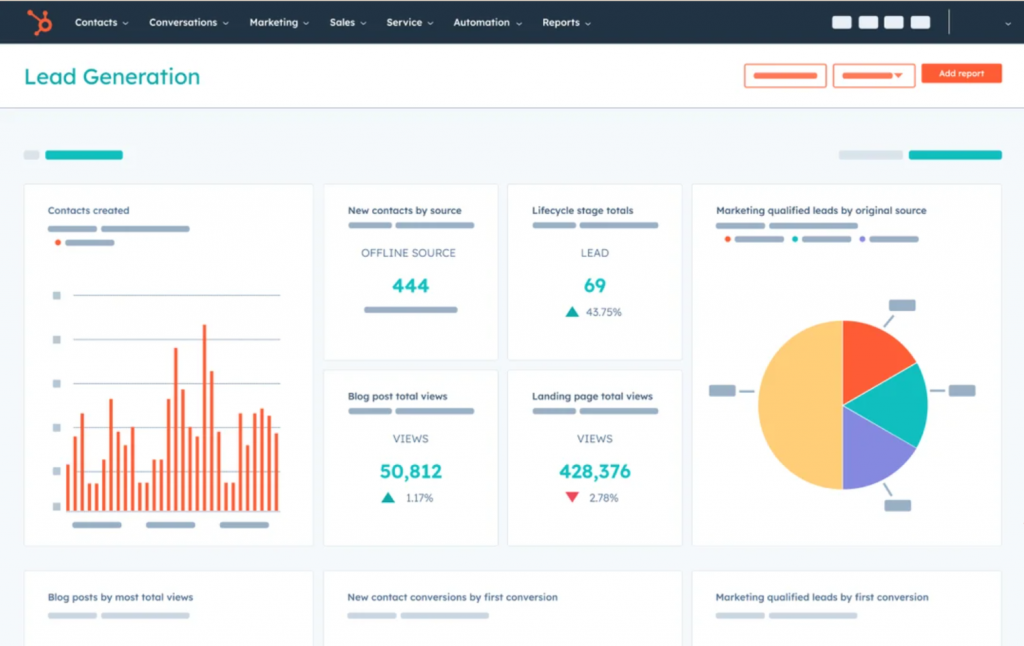
A friend of mine who runs a small plumbing and electrical company in Atlanta switched to HubSpot CRM after getting tired of managing everything in spreadsheets. His take: the free plan is genuinely impressive for a business just starting to get organized. He could track every lead, log calls and emails, and see his pipeline in a visual board.
The catch, as he found out after about 18 months, is that HubSpot’s free tier has clear limits. The moment he wanted automation, email sequences, or advanced reporting, the pricing jumped significantly. For a 2–3 person electrical contracting team that just needs basic contact management and deal tracking, it’s a solid starting point. But scaling with HubSpot gets expensive fast.
HubSpot also isn’t built specifically for the trades, which means some setup is required to make it feel like a proper electrical contractor CRM rather than a generic sales tool.
Pros:
- Generous free plan with contact management, deal pipeline, and basic reporting
- Well-designed interface with a short learning curve for non-technical users
- Strong integration ecosystem that connects with Gmail, Outlook, Slack, and hundreds of other tools
- Email tracking shows when prospects open your quote follow-ups
Cons:
- Not built for the trades. It requires manual configuration to match electrical contractor workflows
- Not built for field service and lacks job scheduling, dispatching, or invoicing
Pricing:
Free plan available; paid plans start at $15/user/month.
4. ServiceTitan – Best for Large Electrical Contractor Businesses
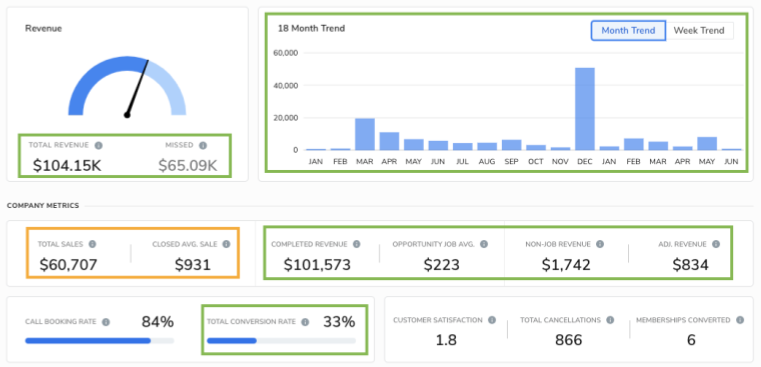
Image source: ServiceTitan
ServiceTitan is an enterprise-grade platform built exclusively for the trades covering electrical, HVAC, and plumbing operations. It has tools for dispatch, marketing, reporting, and full business management.
From dispatch and inventory to marketing automation and detailed revenue reporting, it covers the full operation end to end.
That said, ServiceTitan is clearly built for established, larger electrical businesses and not sole operators or small teams. The onboarding process alone takes weeks, and the custom pricing puts it out of reach for most small contractors.
Pros:
- Built specifically for electrical, HVAC, and plumbing contractors
- End-to-end coverage from lead capture to job completion to invoice collection
- Advanced reporting and revenue analytics for business decision-making
- Includes marketing tools, customer communication features, and technician performance tracking
Cons:
- Pricing is not transparent and is typically out of budget for small electrical businesses
- Onboarding is lengthy and complex
Pricing:
Custom pricing (typically $500+/month for smaller tiers).
5. Pipedrive – Best for Electrical Contractors Focused on Sales Pipeline Tracking
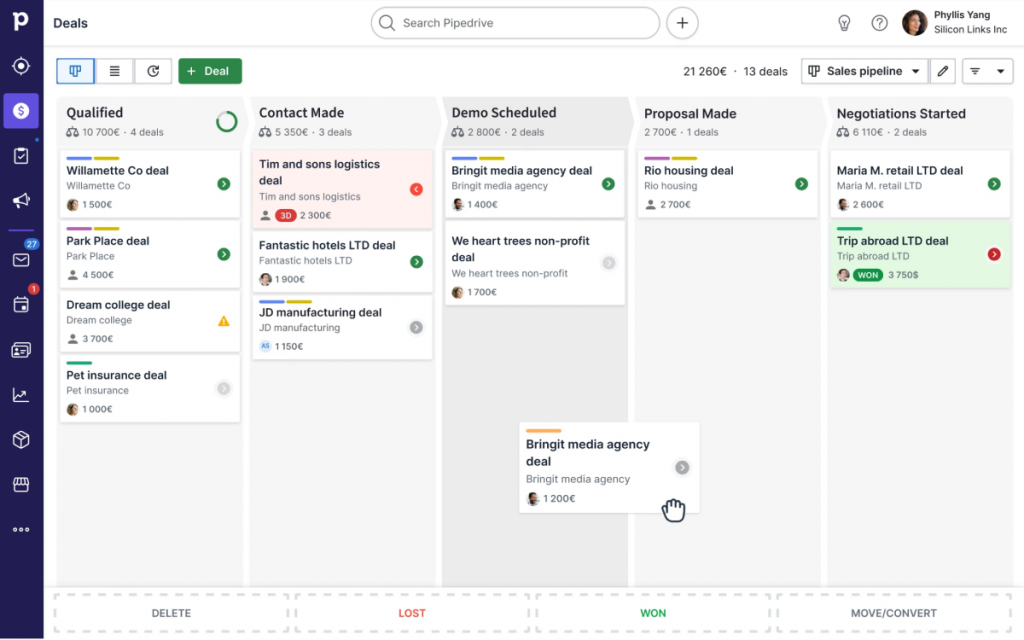
Pipedrive is a visual sales pipeline CRM that helps electrical contractors track quotes, deals, and follow-up activities through a simple drag-and-drop interface.
Pipedrive was the first real CRM I ever used seriously, and for managing a sales pipeline it does an excellent job. The visual deal board is intuitive. You can drag and drop leads across stages like “Quote Sent” or “Awaiting Response,” which gives you a bird’s-eye view of everything in your pipeline at once.
What I found over time was that Pipedrive is very sales-focused, almost to a fault. It’s built around deals and activities rather than deep contact relationship management. The automation features are also only available on higher-tier plans, which bumps up the cost.
Pros:
- Extremely intuitive visual sales pipeline that’s easy to set up and use immediately
- Activity-based reminders ensure follow-ups never get missed
- Good email integration with tracking for quote follow-up visibility
- Customizable pipeline stages to match the electrical contractor sales cycle
Cons:
- Automation and workflow features require higher-tier plans
- Per-user pricing adds up quickly for teams larger than 3–4 people
Pricing:
Starts at $14/user/month.
6. Zoho CRM – Best Budget-Friendly CRM for Electrical and Plumbing Contractors
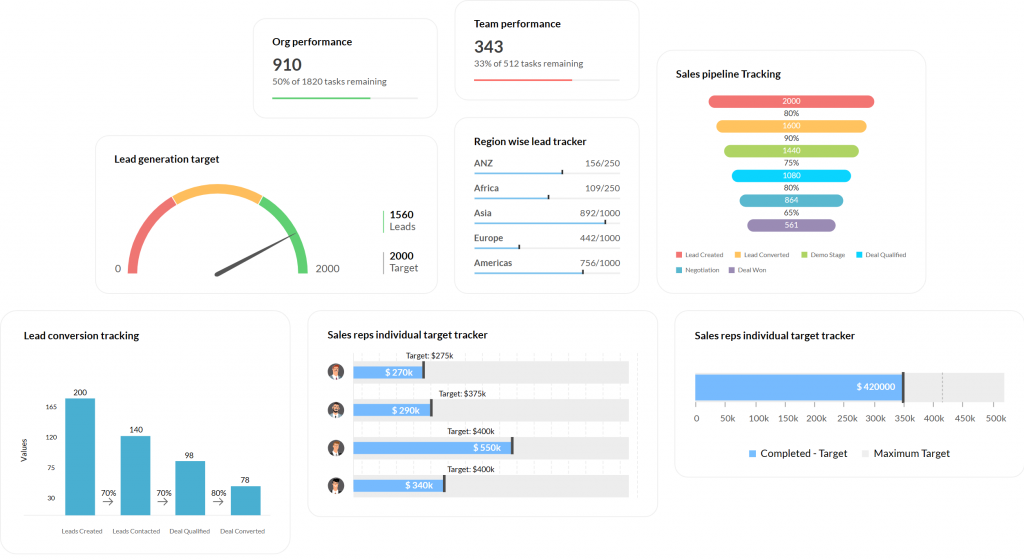
Zoho CRM is a highly customizable, low-cost CRM that gives electrical and plumbing contractors access to automation, pipelines, and email campaigns at one of the most competitive price points on the market.
A colleague of mine who runs an HVAC and electrical service business switched to Zoho from HubSpot specifically because of the cost. He was getting automation, email campaigns, custom pipelines, and reporting all under $15/user/month.
Once it was running, it worked well, but the initial setup experience was rough, especially for someone who isn’t particularly tech-savvy.
Pros:
- One of the most affordable CRMs with serious automation and pipeline features included
- Highly customizable and can be configured to match electrical contractor workflows
- Includes email marketing, lead scoring, and workflow automation at lower price tiers
- Strong integration capabilities with tools like QuickBooks, Outlook, and Gmail
Cons:
- Interface can feel cluttered and overwhelming, especially for first-time CRM users
- Initial setup and customization require significant time investment
Pricing:
Starts at $14/user/month (free plan available for up to 3 users).
7. BuildOps – Best CRM for Commercial Electrical Contractors
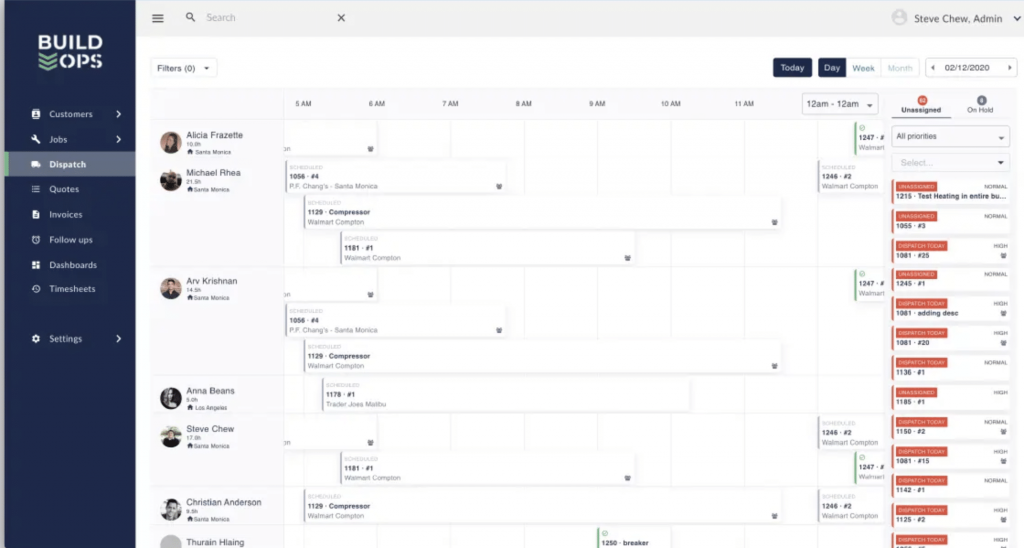
Image source: Software Advice
BuildOps is a commercial contractor management platform that combines CRM, project tracking, dispatch, and field communication tools specifically for mid-to-large electrical and mechanical businesses.
BuildOps is a newer platform built from the ground up for commercial contractors, specifically electrical, mechanical, and plumbing businesses doing larger-scale project work. It handles the complexity of multi-site commercial jobs far better than general CRMs do.
Where it struggles is accessibility. It’s squarely aimed at mid-to-large commercial operations, and the pricing reflects that.
Pros:
- Combines project management, dispatch, and CRM in one platform
- Strong real-time field communication tools between office and technicians
- Handles complex, multi-phase commercial job tracking effectively
- Good reporting tools for project profitability and performance
Cons:
- Not suitable for residential electrical businesses or small teams
- Steeper learning curve than simpler CRM tools
Pricing:
Custom pricing.
8. Housecall Pro – Best for Residential Electrical and Home Service Businesses
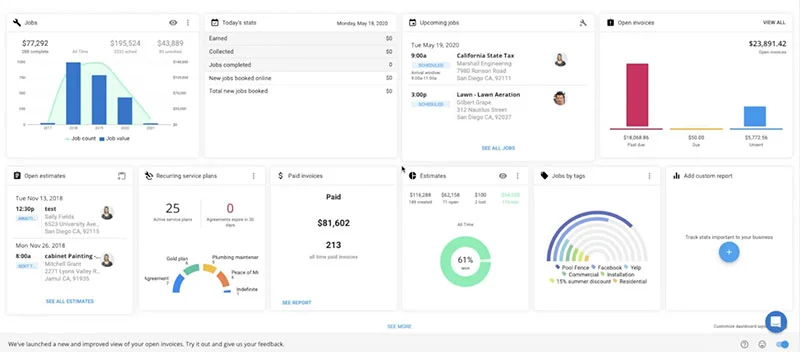
Image source: Trafft
Housecall Pro is a residential home service management tool that handles online booking, job dispatch, customer communication, and payment collection for small electrical and plumbing businesses.
Housecall Pro was one of the first field service platforms I saw gain real traction among residential electrical and plumbing contractors, and for good reason. It keeps things simple, like booking a job, dispatching a tech, collecting payment, get a review.
The limitations show up when you try to use it as a full CRM for electrical business development. It’s great at managing jobs with existing customers, but it doesn’t offer much for lead nurturing or pipeline tracking.
Pros:
- Extremely easy to set up and use with a minimal learning curve for field technicians
- Automated job reminders, follow-ups, and review requests improve customer experience
- Online booking and payment collection are built into the platform
- Strong GPS tracking and dispatch tools for managing field teams
Cons:
- Limited pipeline and lead management features for proactive business development
- Not well-suited for commercial electrical contractors managing complex project work
Pricing:
Starts at $49/month.
My Top 3 Picks for the Best CRM for Electrical Contractors
After testing and researching all the tools on this list, these are the three I’d confidently recommend to any electrical contractor, whether you’re just getting started or looking to scale.
1. BIGContacts
BIGContacts is my number one pick for most electrical contractors, and it’s not even close. It gives you everything that actually matters for an electrical business, like clean contact management, automated follow-ups, a visual sales pipeline, and email integration without burying you in features you’ll never touch. Whether you’re tracking a handful of commercial prospects or managing outreach across hundreds of leads, BIGContacts keeps things organized, fast, and simple.
2. Jobber
Jobber earns its place on this list for electrical contractors whose biggest pain point is operational issues like scheduling jobs, dispatching crews, and getting paid faster. If your business is primarily residential and your sales largely come through inbound calls and referrals rather than active outreach, Jobber handles the day-to-day workflow better than almost anything else on the market.
3. HubSpot CRM
HubSpot is the top pick for solo electricians or very small teams who aren’t ready to commit to a paid tool yet. The free plan is surprisingly capable for basic lead tracking and pipeline visibility, and it’s a great way to build the CRM habit before upgrading to something more powerful as your business grows.
What Is the Difference Between a CRM and Field Service Software?
Field service software manages the operational side, like job scheduling, dispatching crews, and collecting payments. A CRM for electrical contractors manages the sales side with leads, relationships, quotes, and follow-ups.
Many electrical businesses need both. Field service tools run your jobs. A CRM wins your jobs. They solve different problems and work best when used together.
| Feature | CRM | Field Service Software |
|---|---|---|
| Contact & lead management | ✅ | Limited |
| Sales pipeline tracking | ✅ | ❌ |
| Email follow-up automation | ✅ | ❌ |
| Job scheduling & dispatch | ❌ | ✅ |
| Invoicing & payments | ❌ | ✅ |
| Mobile field technician tools | Limited | ✅ |
What Criteria Did I Use to Evaluate These CRM Tools?
I didn’t just sign up for free trials and click around for an hour. I evaluated each tool the way an electrical contractor actually would, based on real daily use, team adoption, and whether it solved the problems that actually cost contractors time and money. Here’s exactly what I looked at:
- Ease of Use: I checked how quickly someone with zero CRM experience could get up and running. If it took more than a day to feel comfortable, that counted against it. Electrical contractors don’t have time for long learning curves.
- Contact and Lead Management: I tested how well each tool organized contacts, stored interaction history, and made it easy to find a lead fast, even weeks after the last conversation.
- Follow-Up Automation: I specifically looked at whether the tool could send automated follow-up emails after a quote was sent, without any manual trigger. This is the feature that directly prevents lost jobs.
- Sales Pipeline Visibility: I evaluated whether you could see your entire quote pipeline at a glance — what’s open, what’s stalled, and what needs attention today without digging through menus.
- Email Integration: I tested Outlook and Gmail sync to confirm that all sent and received emails were automatically logged against the right contact record, with no manual copy-pasting required.
- Mobile Accessibility: I used each tool from a phone to simulate checking leads between job site visits. Tools that were clunky or feature-limited on mobile got marked down.
- Pricing Transparency: I looked at what you actually get at the entry-level price not just the headline number. Several tools advertise a low starting price but lock key features behind expensive tiers.
- Industry Fit for Contractors: I assessed whether each tool could be configured to match a real electrical contractor workflow with custom pipeline stages, lead types like residential vs. commercial, and tagging for different trade categories.
- Team Collaboration: I checked whether multiple users (office manager, owner, salesperson) could share a contact database and see each other’s activity without stepping on each other’s work.
- Customer Support Quality: I contacted support for each tool with a basic setup question and rated the response time, clarity, and helpfulness because when something breaks, you need fast answers.
Stop Losing Contracts and Close More Deals With the Right CRM
Running an electrical contracting business is hard enough without chasing down contacts in spreadsheets or trying to remember which leads you followed up on last week. The good news is that getting organized doesn’t require an enterprise software budget or weeks of onboarding. The right CRM for electrical contractors simply needs to fit how you work, and once it does, the difference shows up quickly in fewer missed follow-ups, faster quote conversions, and more repeat business from existing customers.
The tools on this list aren’t here to complicate your workflow. They exist to give you one reliable place to see every lead, every conversation, and every next step so you can spend less time managing chaos and more time actually doing the work you’re good at.
If you’re not sure where to start, begin with whatever feels least intimidating and most relevant to your biggest daily frustration. For most electrical contractors, that frustration is losing track of leads and forgetting to follow up, and a simple contact management and automation tool like BIGContacts tends to solve that problem without adding new ones.
Frequently Asked Questions
Do electricians really need a CRM?
If you're losing track of quotes, forgetting to follow up, or running your contact list out of a spreadsheet or email inbox, then yes, absolutely. Even a simple electrician CRM helps you capture every lead, stay on top of callbacks, and close more jobs without the mental overhead.
What is the difference between a CRM and field service software?
Field service software like BIGContacts, Jobber handles scheduling, dispatch, and invoicing. A CRM for electrical contractors handles relationships, lead tracking, and sales pipeline management. Many electrical businesses use both, one to run jobs, one to win them.
Is it hard to set up a CRM if I've never used one before?
Not at all, especially with tools built for small businesses. Most modern electrician CRMs like BIGContacts are designed so you can get up and running in a day without any technical background or formal training.
Can I import my existing contacts from Excel into a CRM?
Yes, most CRMs support bulk contact import via CSV or Excel files. Most tools make it straightforward with a downloadable import template to map your existing data cleanly into the system.
What is the best free CRM for electrical contractors?
HubSpot's free plan is the most capable no-cost option for basic contact and pipeline management. For electrical contractors who need follow-up automation and email integration from day one, an affordable paid tool starting around $9–$10/user/month like BIGContacts often delivers far better results.
How many users do I need for a CRM for my electrical business?
Many small electrical businesses start with just 1–3 users — the owner, an office manager, and a salesperson. Most CRM pricing is per user, so you only pay for what you actually need and can scale as your team grows.
Can a CRM help me follow up on quotes automatically?
Yes, and this is one of the most valuable things a CRM does for contractors. You set up automated follow-up emails that go out a few days after a quote is sent, so the prospect hears from you without you having to remember to do it manually.
Can a CRM help electrical contractors get more leads?
A CRM does not generate leads on its own, but it ensures you never lose the leads you've already worked to get. Automated follow-ups, pipeline visibility, and email tracking help you convert more of your existing leads — which is often the bigger revenue opportunity.
How much does a good CRM for electrical contractors cost?
Most small-business-friendly CRMs range from $10 to $50 per user per month. The sweet spot for most electrical contractors tends to fall in the $10–$30/user/month range. Some tools like BIGContacts even offer a free plan for growing teams.
Can I use a CRM on my phone from a job site?
Yes. Most modern CRMs have a mobile app or mobile-friendly interface so you can log a call, check a contact's history, or update a deal stage right from your phone between jobs. Mobile access is worth confirming before you commit to any tool.
FREE. All Features. FOREVER!
Try our Forever FREE account with all premium features!