

Most engineering firms don’t lose clients because of bad execution; they lose them because of bad follow-up.
I’ve spent a good chunk of time talking to founders, project managers, and sales leads at engineering firms of all sizes. And the story is almost always the same: contacts buried in spreadsheets, proposals sent and never followed up on, leads going cold because someone forgot to send that one email. If you’re searching for the right engineering CRM software, you already know this pain better than anyone. The problem isn’t your team, it’s the tools you’re using (or not using).
The good news? You don’t need a bloated platform with 200 features you’ll never touch. What engineering firms actually need is something simple, reliable, and built around the way you work with long sales cycles, relationship-heavy pipelines, and a lean team that has zero time to waste on complicated software.
I’ve put together this list of the best CRM for engineering firms after researching dozens of options, digging through community forums, and speaking to people who actually use these tools day to day. Let’s get into it.
What Is Engineering CRM Software?
Engineering CRM software is a customer relationship management tool that helps engineering firms organize client contacts, track deal pipelines, automate follow-ups, and centralize all team communication in one place, replacing scattered spreadsheets, email threads, and sticky notes with a single system of record.
Unlike generic CRMs built for fast-moving retail or SaaS sales, engineering CRM is designed for long sales cycles, multi-stakeholder relationships, and project-based client management.
A single deal can take 6 to 12 months to close, and the client relationship often continues well into the delivery phase. A good engineering CRM handles that complexity without adding administrative burden to your team.
Signs Your Engineering Firm Needs a CRM Right Now
Not sure if you actually need one? If any of these sound familiar, you do:
1. You’re Still Living in Spreadsheets
If your contact list, deal stages, and follow-up reminders all live in Excel or Google Sheets, you’re one missed update away from losing a client. Spreadsheets don’t send you reminders. They don’t track who said what or when. And they definitely don’t scale.
2. Leads Are Falling Through the Cracks
You sent a proposal three weeks ago and never followed up. Sound familiar? Without a CRM, follow-ups depend entirely on memory and memory isn’t a system.
3. Your Team Has No Shared View of the Pipeline
When every salesperson or project manager has their own version of “the client list,” you end up with duplicated effort, missed handoffs, and confused clients who get called twice by two different people.
4. You’re Losing Track of Where Relationships Stand
Engineering sales cycles are long. Six months in, can you quickly tell what was discussed in the last call, what was promised, and what the next step is? If the answer is “I’d have to dig through my emails,” a CRM will change your life.
5. You Just Won a Deal and Have No Idea How to Hand It Off
The gap between sales and delivery is where a lot of engineering firms drop the ball. A CRM bridges that gap and keeps the relationship intact from first contact to project close.
Top 7 Engineering CRM Software to Manage Clients, Projects & Pipelines
Here’s a quick look at the tools we’ll be covering:
| Tool | Best For | Pricing |
|---|---|---|
| BIGContacts | Contact management & email marketing for growing businesses | Free for growing teams. Paid plan starts at $9.99/month |
| HubSpot CRM | Firms wanting a free starting point with marketing tools | Starts at $0 (Free plan available) |
| Pipedrive | Visual pipeline management for B2B engineering sales | Starts at $14/user/month |
| Salesforce | Large engineering enterprises needing deep customization | Starts at $25/user/month |
| Zoho CRM | Budget-conscious firms needing multi-channel outreach | Starts at $14/user/month |
| monday.com | Teams blending project management with client tracking | Starts at $12/user/month |
| Insightly | Engineering firms managing projects post-sale | Starts at $29/user/month |
1. BIGContacts – Best for Contact Management & Email Marketing for Growing Businesses
If you’re running a lean engineering team and need a CRM that actually works without a dedicated IT person to set it up, BIGContacts is worth a serious look right now. No endless onboarding, no 40-tab dashboards, just clean contact management, pipeline tracking, and email automation that does what it promises.
What makes it stand out for engineering firms specifically? The contact timeline is exceptional. Every call, email, note, and follow-up task is logged chronologically against each contact. For engineering sales where a single deal can take 6 to 12 months to close, that kind of visibility is everything.
I’m currently using BIGContacts to manage a pipeline with contacts sitting at various stages from RFQ (Request for Quotation, where potential clients formally ask for pricing and specs) and technical evaluation to vendor approval and project kickoff, all with long follow-up cycles. What I love most is how the automated follow-up reminders work. The email integration with both Gmail and Outlook is seamless, which honestly was a dealbreaker requirement for us.
Pros:
- Clean, intuitive interface that requires zero technical knowledge to get started
- Automated follow-up reminders prevent leads from slipping through the cracks
- Detailed contact timelines log every interaction, like calls, emails, notes, and tasks in one place
- Solid Gmail and Outlook integration for two-way email sync
Cons:
- No downloadable or on-premise version
- No dedicated account manager for the free plan, unlike the paid version
Pricing:
Starts at $5/user/month.
2. HubSpot CRM – Best Free CRM for Engineering Firms Getting Started
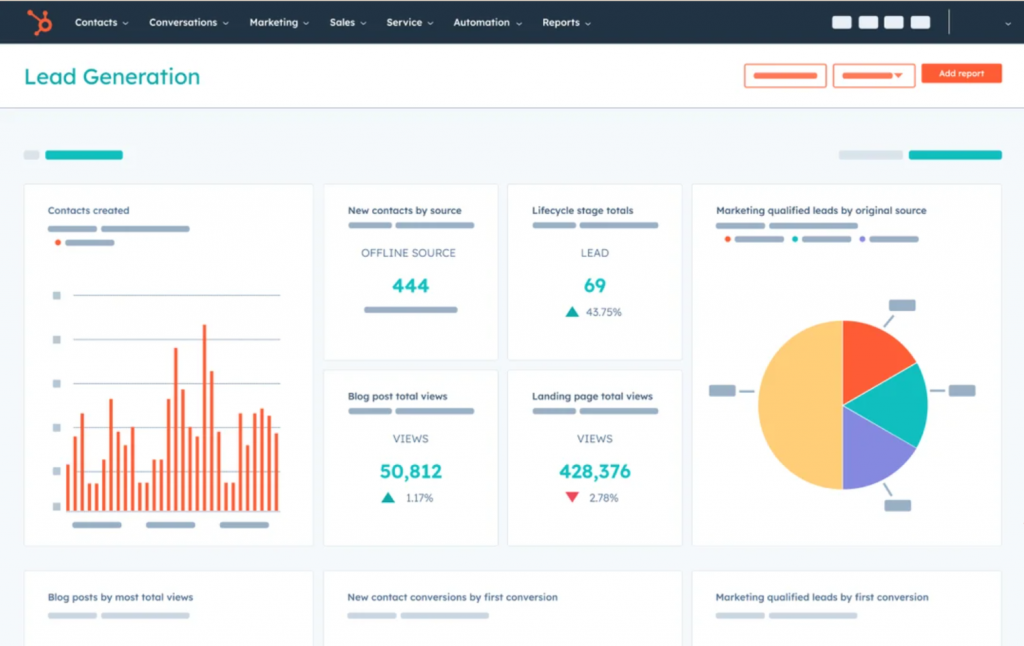
A lot of engineering firms I’ve spoken to started their CRM journey with HubSpot and for good reason. The free tier is genuinely useful. My experience with HubSpot was a mixed bag. I tried it a couple of years ago when our team was small. The pipeline views were clean, contact management was solid, and setting up basic email sequences wasn’t too painful.
But as the team grew and we started needing more advanced reporting and segmentation, the paid tiers got expensive fast, especially when you’re licensing for 5+ users.
For engineering firms that are just getting started with CRM and want to understand the basics without spending money upfront, HubSpot’s free plan is a great sandbox. The moment you start needing automation, custom properties, or deeper analytics though, you’re quickly pushed toward pricing that starts feeling enterprise-level without being an enterprise.
Pros:
- Clean visual pipeline that’s easy for non-technical users to understand
- Strong email tracking and notification features
- Large ecosystem of integrations and third-party apps
- Excellent educational resources and onboarding support
Cons:
- Costs escalate quickly when unlocking marketing and automation features
- Reporting customization is limited on lower-tier plans
Pricing:
Starts at $15/user/month (Free plan available).=
3. Pipedrive – Best CRM for Visual Sales Pipelines
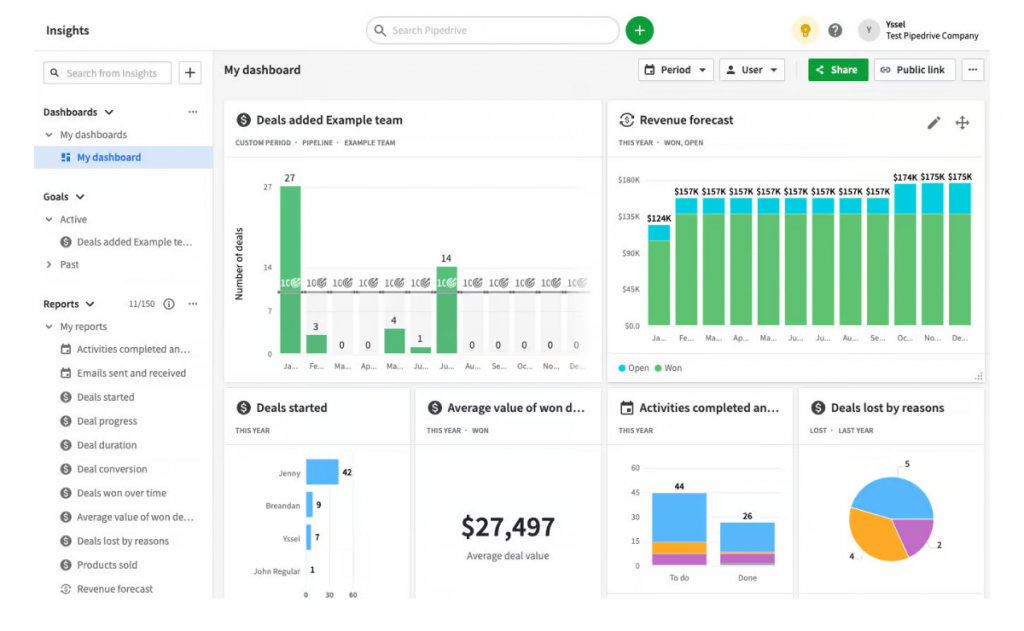
Pipedrive is one of those tools that genuinely looks good at first glance and the visual pipeline approach is something a lot of engineering sales teams find really intuitive.
A colleague of mine at a mid-sized structural engineering firm switched to Pipedrive after years of managing deals in a spreadsheet. The drag-and-drop deal stages, activity reminders, and email tracking all worked exactly as advertised. His team got up and running in less than a week.
That said, he also mentioned that as their team grew past 10 users, the per-seat cost started adding up and some of the features they needed, like workflow automation, were locked behind higher pricing tiers. For a small engineering firm with a clear, defined sales process, though, Pipedrive is a very strong option.
Pros:
- Highly visual, drag-and-drop pipeline that’s easy to manage and update
- Strong activity-based selling features keep engineers focused on next steps
- Email integration and tracking works reliably across Gmail and Outlook
- Smart contact data feature auto-enriches profiles from public sources
Cons:
- Key features like workflow automation are only available on higher plans
- Lacks built-in project management for post-sale engineering workflows
Pricing:
Starts at $14/user/month.
4. Salesforce – Best CRM for Large Engineering Enterprises
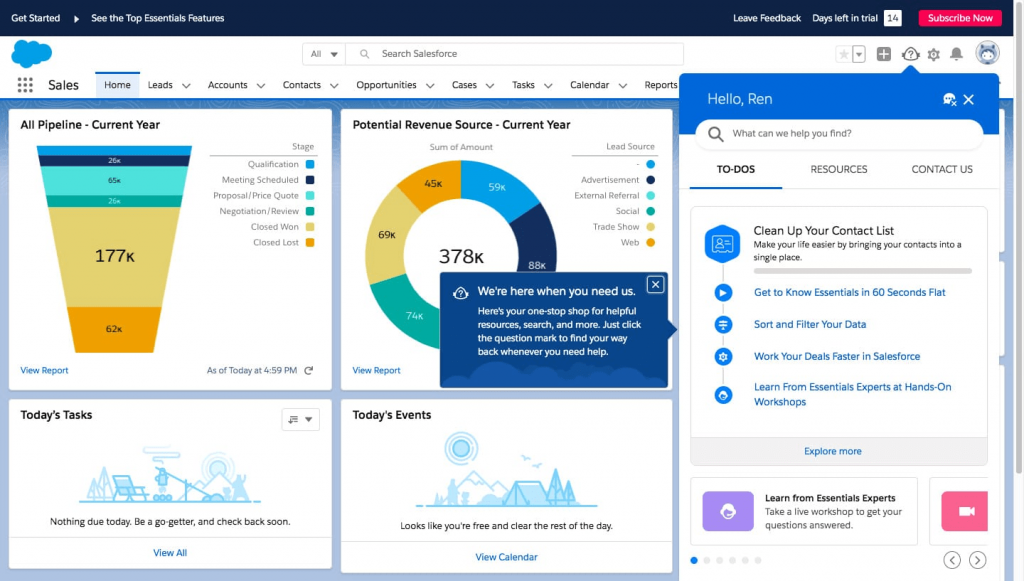
I tried Salesforce during a consulting engagement with a larger engineering company a few years back. The customization depth is genuinely impressive. You can build workflows, dashboards, and automation sequences for almost any sales process you can imagine.
But the implementation process was a project in itself. We needed a dedicated Salesforce admin, weeks of configuration, and a fair amount of training before the team was actually comfortable using it.
For a large engineering enterprise with a dedicated IT or operations team, Salesforce makes complete sense. For a 5-person engineering firm? It’s almost certainly overkill and the cost reflects that.
Pros:
- Unmatched customization and scalability for large, complex engineering organizations
- Massive ecosystem of integrations and AppExchange add-ons
- Advanced AI features (Einstein AI) for predictive sales insights
- Enterprise-grade security and compliance features
Cons:
- Pricing is prohibitive for small to mid-sized engineering firms
- Implementation can take weeks or months for complex setups
Pricing:
Starts at $25/user/month.
5. Zoho CRM – Best for Multi-Channel Outreach
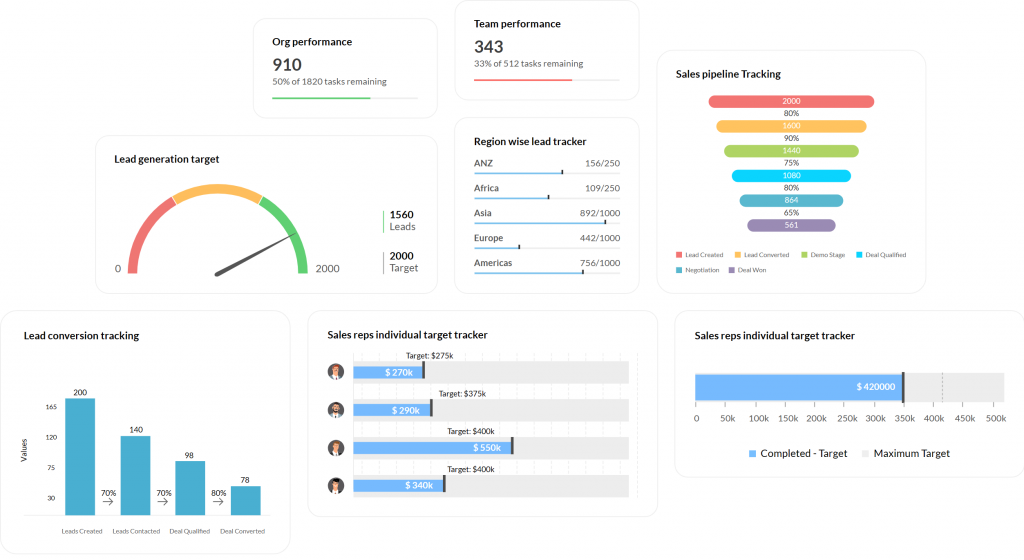
Zoho CRM sits in an interesting middle ground. It is more capable than most lightweight tools, less expensive than the enterprise giants. For cost-conscious engineering firms that need multi-channel outreach and reasonable automation, it’s worth evaluating.
A friend who runs a small civil engineering consultancy switched to Zoho CRM after finding HubSpot too expensive and Salesforce completely out of reach. She was pleasantly surprised by the depth of features at the price point with email, phone, social media, and live chat all feeding into one contact record. The AI assistant, Zia, was useful for spotting deal anomalies and flagging follow-up delays before they became real problems.
Her one complaint was the user interface. It felt a bit dated and cluttered compared to cleaner tools like Pipedrive, and onboarding new team members took longer than expected because of how menu-heavy the navigation is.
Pros:
- Multi-channel communication (email, phone, social) tracked in one place
- Zia AI assistant helps surface deal insights and follow-up suggestions
- Highly customizable fields, layouts, and modules for engineering-specific workflows
- Strong Outlook and Gmail integration
Cons:
- Interface can feel cluttered and dated compared to more modern CRM tools
- Customer support response times can be inconsistent
Pricing:
Starts at $14/user/month.
6. monday.com – Best for Projects and Client Management
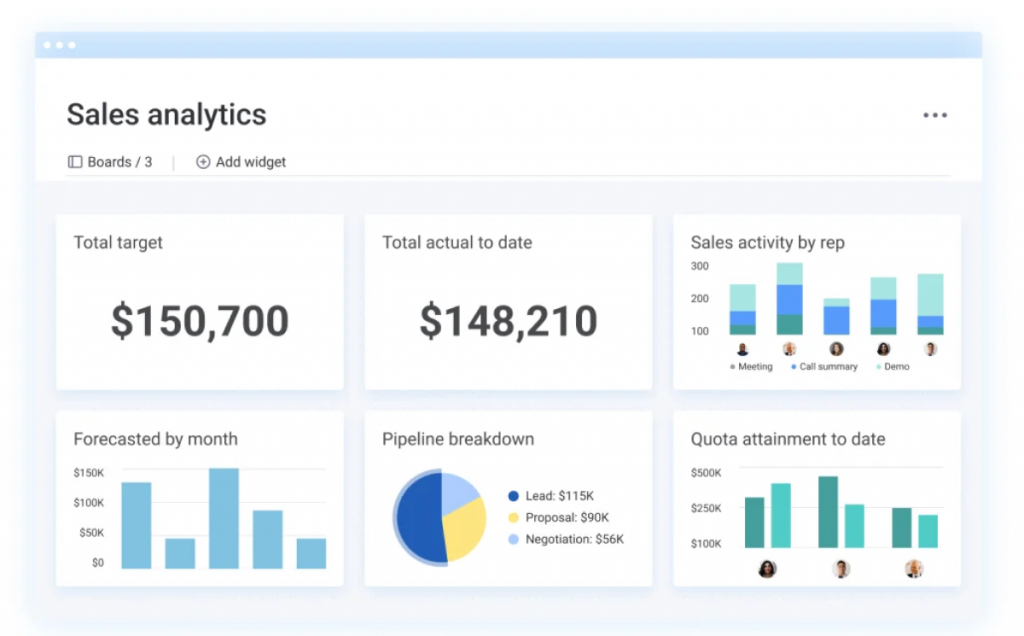
monday.com is technically more of a project management tool than a pure CRM but for engineering firms where client relationships and project delivery are deeply intertwined, that blurring of lines is actually useful.
I explored monday.com during a period when our team was struggling with the gap between winning a deal and delivering the project. Most CRMs drop the ball entirely once a deal is marked “won.” monday.com lets us extend the same visual board from lead → proposal → won → active project → handoff, all in one place. That continuity was genuinely helpful for engineering workflows where the relationship doesn’t end at the contract signature.
The downside was that the pure CRM functionality, like contact timelines, email sequences, and follow-up automation isn’t as deep as dedicated CRM tools. It’s great as a hybrid, but if client relationship management is your primary need, you might find it lacking.
Pros:
- Highly visual boards make it easy to track deals and projects side by side
- Flexible enough to adapt to almost any engineering workflow
- Strong team collaboration and task assignment features
- Wide range of integrations, including Outlook, Gmail, and Slack
Cons:
- Pricing is per seat and can get expensive with add-ons
- Email sequencing and follow-up automation aren’t as robust as CRM-first tools
Pricing:
Starts at $12/user/month.
7. Insightly – Best CRM for Engineering Firms Managing Post-Sale Projects
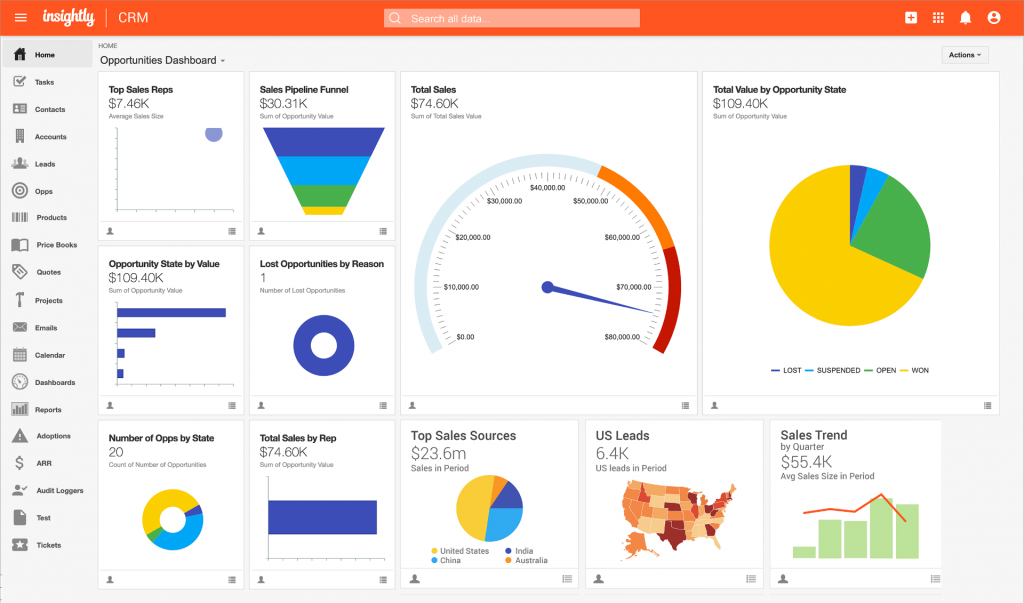
Insightly is one of the few CRM platforms that genuinely bridges the gap between sales pipeline management and project delivery, which makes it particularly relevant for engineering firms that manage complex, long-term client engagements.
A project manager at a mechanical engineering firm I worked with used Insightly specifically because it let her team hand off a won deal directly into a project workflow without switching tools. Contact records, project milestones, task assignments, and client communications all lived in the same platform. For engineering firms where the sales team and the delivery team need to share information without friction, that’s a meaningful advantage.
The trade-off is that Insightly’s interface isn’t the most intuitive, and the email marketing features feel like an afterthought compared to dedicated CRMs. But as a relationship management and project handoff tool for engineering, it punches above its weight.
Pros:
- Unique ability to convert won deals directly into managed projects within the same platform
- Strong contact and organization linking maps relationships between clients, subcontractors, and partners
- Built-in project management with milestones and task tracking
- Mobile app is functional for field-based engineering teams
Cons:
- Interface can feel outdated and navigation isn’t always intuitive
- Email marketing features are basic compared to CRM-first tools
Pricing:
Starts at $29/user/month.
My Top 3 Picks for the Best Engineering CRM Software
I’ve gone through a lot of tools on this list, and if I had to narrow it down to just three, these are the ones I’d confidently recommend to any engineering firm, regardless of size or budget.
1. BIGContacts
BIGContacts is my number one pick for engineering firms, and it’s not even close at the small to mid-sized level. What keeps me coming back to it is how effortlessly it handles the things that actually matter in engineering sales, like long follow-up cycles, cluttered contact histories, and team visibility across an active pipeline. The automated reminders alone have saved deals that would have otherwise gone cold.
2. Pipedrive
Pipedrive is my second pick, especially for firms with a more defined, repeatable sales process. If your team is visual and thinks in stages like lead, proposal, negotiation, and close, Pipedrive’s drag-and-drop pipeline just clicks. A colleague of mine at a structural engineering firm swears by it for keeping his sales team focused on the right deals at the right time. It’s not the cheapest option, but the clarity it brings to a busy pipeline is worth it.
3. Insightly
Insightly rounds out my top three specifically for engineering firms, where the client relationship doesn’t end when the contract is signed. If your team is managing delivery, milestones, and ongoing client communication post-sale, Insightly is the only tool on this list that handles both sides of that equation without forcing you to switch platforms mid-engagement.
How I Evaluated These Engineering CRM Software Tools
Picking the right CRM for an engineering firm isn’t the same as picking one for a retail business or a marketing agency. Engineering sales are relationship-heavy, cycle-long, and team-dependent so my evaluation was built around that reality. Here’s exactly what I looked at:
- User Reviews & Ratings: I dug into real feedback from engineers, project managers, and firm owners on platforms like G2, Capterra, and Reddit communities like r/CRM and r/civilengineering. If real users in engineering contexts were frustrated by something like slow support, missing integrations, or confusing UI, it counted against the tool.
- Core Features & CRM Functionality: I focused specifically on features that matter for engineering firms: contact timeline depth, pipeline management, follow-up automation, and email integration. Tools that checked these boxes for engineering workflows scored higher than those with flashy features irrelevant to the industry.
- Ease of Use: Most engineering firms don’t have a dedicated CRM admin or IT support. So I paid close attention to how quickly a non-technical user, like a project manager, a sales lead, or a firm owner, could get up and running. If a tool needs weeks of onboarding, it loses points.
- Customer Support Quality: I looked at how well each tool supports users during setup and beyond with response times, availability of live support, quality of documentation, and how effectively issues get resolved. For small engineering firms, especially, good support can make or break the experience.
- Value for Money: Engineering firms, particularly smaller ones, are cost-conscious. I weighed each tool’s pricing against what you actually get at that tier. A tool that costs more but unlocks features your team will genuinely use every day is better value than a cheap tool that forces constant workarounds.
- Real-World Engineering Use Cases: Beyond specs and pricing, I factored in how each tool performs in situations specific to engineering firms with long B2B sales cycles, post-sale project handoffs, multi-stakeholder relationships, and lean team setups. Personal experience and input from people working in engineering sales informed this part of the evaluation heavily.
Key Features to Look For in Engineering CRM Software
Before you commit to any tool, here are the features that actually matter for engineering firms and not the flashy stuff that sounds good in a demo:
1. Contact Timeline and Activity History
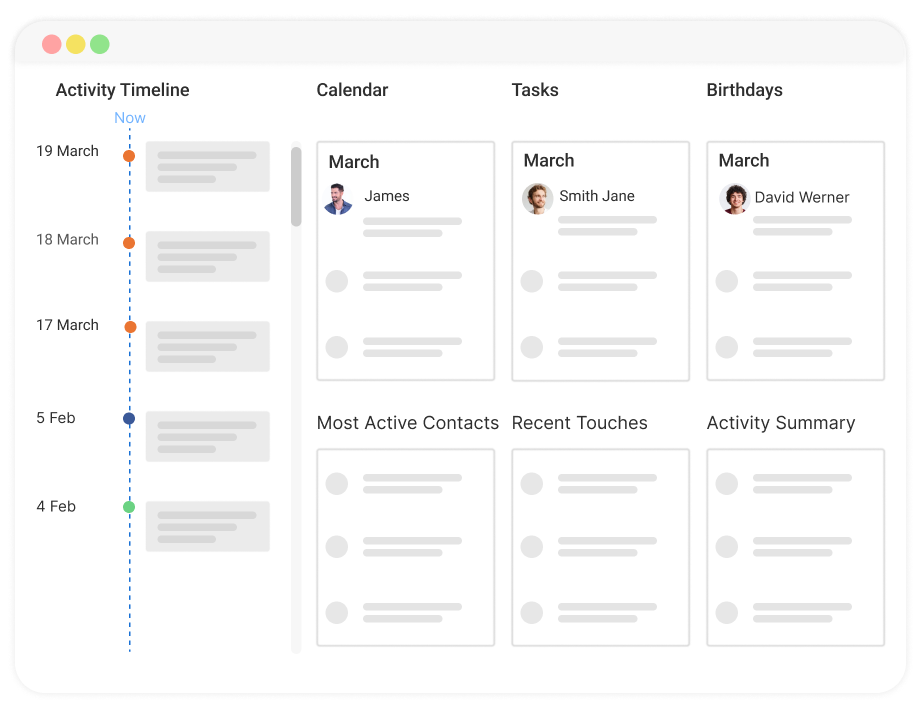
Every call, email, meeting note, and task should be logged against a contact automatically. For long sales cycles, this is non-negotiable.
2. Automated Follow-up Reminders
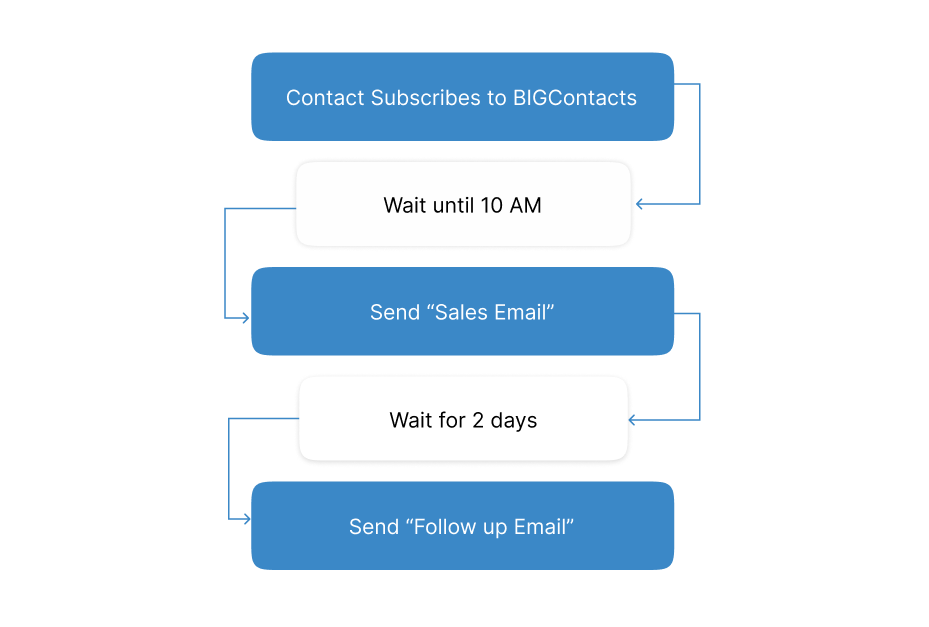
The CRM should nudge you and your team to follow up at the right time, without you having to remember to set a reminder manually.
3. Email Integration
Gmail and Outlook sync is a baseline requirement. You shouldn’t have to manually copy emails into your CRM; it should just happen.
4. Pipeline Visibility
A clear, visual view of where every deal stands across your sales stages. Bonus points if it’s drag-and-drop.
5. Team Collaboration
Multiple users should be able to see the same contact history, leave notes, and assign tasks to each other without stepping on each other’s toes.
6. Simple, Clean Interface
This might sound obvious, but it’s the most overlooked feature. If your team finds the tool confusing, they won’t use it and an unused CRM is worse than no CRM at all.
How to Choose the Right Engineering CRM Software for Your Firm
Not every CRM is built the same, and engineering firms have specific needs that a generic sales tool won’t always address. Here’s what to actually think about before you commit:
1. Your Sales Cycle Length Matters
Engineering deals often take months to close. You need a CRM with strong follow-up automation and a full contact activity timeline, not just a basic pipeline view.
2. Team Size Drives Your Decision More Than You Think
A solo consultant or 3-person firm needs something simple and affordable. A 50-person engineering company needs more user management, permissions, and reporting depth.
3. Think About What Happens After the Deal Is Won
Most CRMs stop caring about a contact the moment a deal is marked closed. If your team continues managing client relationships through delivery, which most engineering firms do, and look for tools that support post-sale workflows.
4. Don’t Over-Engineer Your CRM Selection
The most common mistake I see is choosing a tool with features you’ll never use. Complexity kills adoption. A simple CRM your whole team actually uses beats a powerful CRM that collects dust.
Choose the Right Engineering CRM Software and Never Lose a Deal Again
Winning more work as an engineering firm rarely comes down to technical capability; most firms are good at what they do. What separates the ones that grow consistently is how well they manage relationships, follow through on conversations, and stay visible to the right clients at the right time. That’s exactly what a good CRM helps you do.
The best engineering CRM software isn’t the one with the longest feature list. It’s the one your team actually opens every morning, trusts with their pipeline, and relies on to tell them who to call next. Complexity is the enemy of adoption, and an unused CRM is just an expensive spreadsheet with a fancier interface.
If you’re just getting started or switching from a tool that’s been frustrating your team, it’s worth starting simple. Pick something with clean contact management, solid follow-up automation, and email integration that works without fuss. A lot of engineering firms find that once they strip away the noise, a straightforward tool like BIGContacts is genuinely all they need to run a tighter, more consistent pipeline.
Frequently Asked Questions
What is the best CRM for engineering firms?
The best CRM for engineering firms depends on your team size and needs. BIGContacts is the top choice for small to mid-sized firms looking for simplicity and affordability. Salesforce suits larger enterprises needing deep customization, while Insightly works well for firms managing post-sale project delivery.
Do small engineering firms really need a CRM?
Yes, especially small firms. Without a CRM, leads fall through the cracks, follow-ups get missed, and client history lives in someone's email inbox. Even a basic CRM dramatically improves how a small engineering team manages relationships and closes deals.
Can engineering firms use a CRM for project management too?
Some CRMs like BIGContacts and monday.com bridge the gap between sales pipeline management and project tracking. For engineering firms where client relationships extend well beyond the sale, these hybrid tools can be very effective.
What should I look for in a CRM for engineering firms?
Look for: automated follow-up reminders, a clear contact activity timeline, Outlook or Gmail integration, simple pipeline management, and pricing that scales with your team. Avoid tools with more features than your team will realistically use because complexity kills adoption.
FREE. All Features. FOREVER!
Try our Forever FREE account with all premium features!