

Did you know that the healthcare industry is rapidly embracing CRM technology to enhance patient care and ease operations?
The global healthcare CRM market is booming! It’s grew from USD 18.31 billion in 2024 to a staggering USD 33.11 billion in 2029.
Healthcare CRM software is transforming how medical practices, hospitals, and clinics manage patient interactions and business processes. But with so many options available, how do you choose the right one for your needs?
I spoke with healthcare administrators, IT managers, and medical professionals to gather their insights on the top healthcare CRM solutions. A common theme emerged: they wanted a CRM for healthcare providers that staff could actually start using without needing weeks of training.
In this blog, I will showcase my findings, helping you compare the 7 best healthcare CRM software in 2026.
If you’re curious about why a CRM solution is important, this quick video is for you –
Comparison Table of Top Medical CRM
To make this easier, I compared the top healthcare CRM systems based on what matters day to day, ease of use, compliance readiness, and how well they fit with EHR and billing workflows.
| Software | Best for | Pricing |
|---|---|---|
| BIGContacts | Contact Management & Email Marketing | Free for growing teams. Paid plan starts at $9.99/month |
| Pegasystems | Workflow Automation | Custom pricing. |
| TrackerPLUS | Physician Strategic Onboarding & Referral Growth | Custom Pricing |
| PlayMaker Health | Post Acute Care | Custom pricing. |
| Caspio | Custom Cloud Applications | Starts at $39/user/month. |
| Pipedrive | Sales Pipeline Management | Starts at $12/user/month. |
| FreeAgent CRM | Team Management | Starts at $84/user/month. |
| Hubspot | Centralizing Sales, Marketing, and Support Operations | Starts at $15/user/month. |
Which Is the Best CRM for Healthcare?
The best healthcare CRM is the one that reduces compliance worry, fits your current systems, and helps your team follow up consistently without extra manual work. If you’re short on time, here’s a quick look at my top 3 picks:
1. BIGContacts
Best for Contact Management & Appointment Scheduling. This tool excels in managing patient contacts, enhancing email marketing campaigns, and automating workflows for healthcare providers.
2. Pegasystems
Best for Workflow Automation. Ideal for automating complex healthcare processes, improving efficiency, and ensuring compliance with industry regulations.
3. HubSpot
Best for Centralizing Sales, Marketing, and Support Operations. Perfect for integrating sales, marketing, and support activities into one platform, providing a seamless experience for healthcare organizations.
8 Top CRM for Healthcare
To compile this list, I evaluated each tool based on its ease of use and scalability, ensuring they cater to various healthcare business CRM needs. My assessment is based on personal experiences, insights from trusted reviews, and feedback from industry peers.
1. BIGContacts – Best for Contact Management & Email Marketing for Growing Businesses
BIGContacts is particularly beneficial for healthcare organizations needing a reliable CRM to manage patient data, communication, and appointments. If you are coming from spreadsheets or outdated tools, the biggest challenge is usually the switch, not the idea of a CRM. But thanks to BIGContacts’ UI, it feels like a simpler step up, especially for teams that want better follow-ups and visibility without making staff learn something complicated on day one.
Its task management features help manage customer relationships. You can schedule appointments, get routine check reminders, and schedule patient follow-ups. It also offers email marketing to send automated emails for appointment confirmation, customer interactions, discounts and promotions, and more.
I used BIGContacts for my CRM and email marketing efforts, and it proved to be incredibly efficient. The tool integrates smoothly with popular email services like Outlook, Mailchimp, and Gmail, allowing for centralized communication.
The platform also offers customizable dashboards and advanced reporting and analytics, providing clear insights into sales and marketing performance. Its HIPAA compliance ensures that patient data is secure, making it a reliable healthcare CRM.
Pros:
- Advanced email marketing features to nurture leads and manage patient appointment emails efficiently
- 360° view of all contacts, including emails, transactions, files, etc, and activities, boosting visibility and productivity
- Calendar management for tracking tasks, meetings, and more and improving team collaboration
- Easily integrates with web forms to collect and manage lead information efficiently.
Cons:
- No downloadable or on-premise version
- No dedicated account manager for the free plan, unlike the paid
Pricing:
A free plan is available for growing teams. Paid plan starts at $9.99/month
2. Pegasystems – Best for Workflow Automation
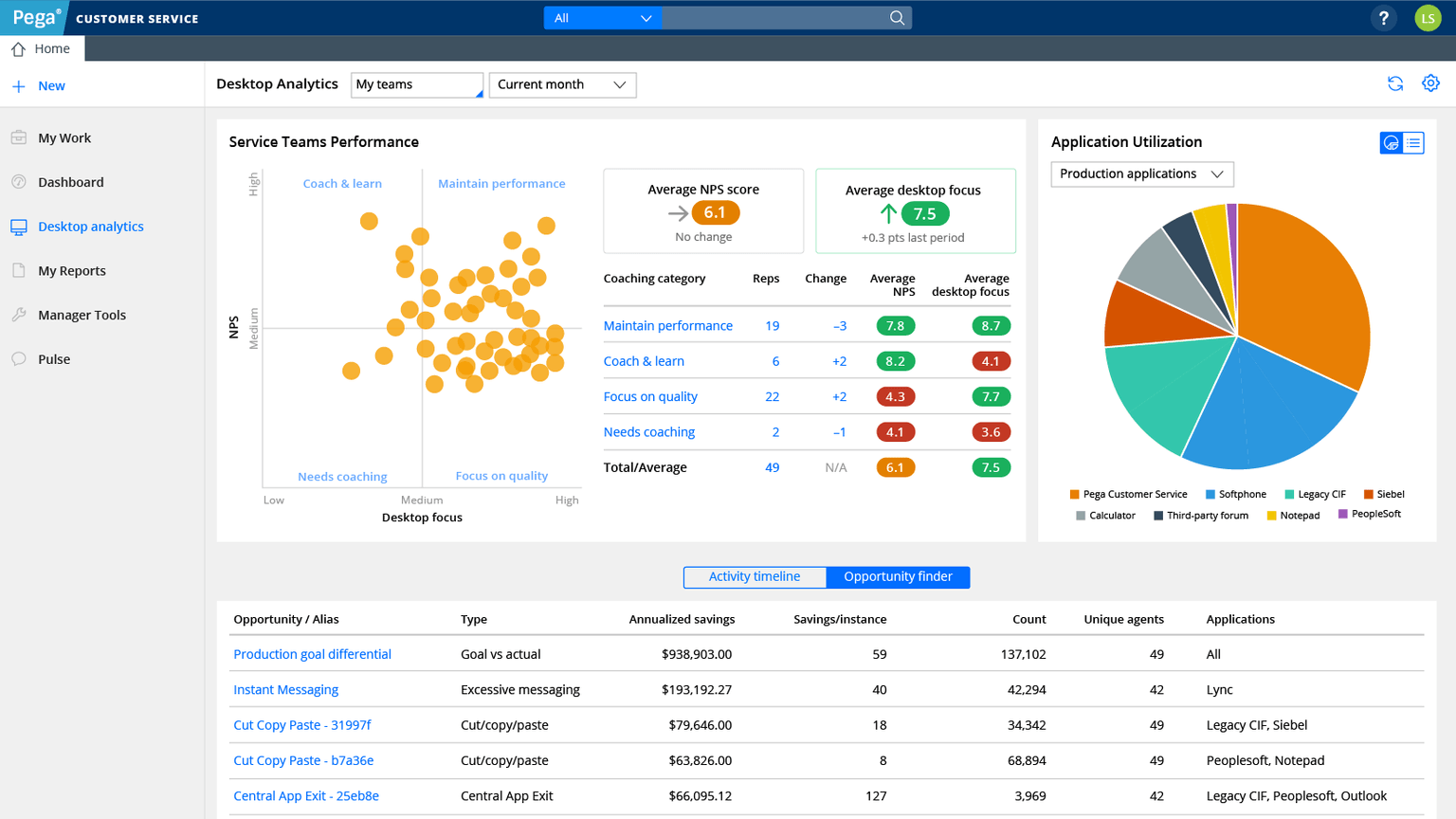
Using Pegasystems CRM has been quite helpful for managing workflows. I liked how it offers comprehensive features to automate processes, which significantly reduces manual tasks and errors.
The platform’s AI-driven decisioning helps personalize patient interactions, improving overall patient care quality. I also appreciated the integration capabilities with various healthcare systems, such as Electronic Health Records (EHRs) and billing systems, ensuring seamless data flow. This matters when your team is tired of entering the same patient details in multiple places. A CRM software for healthcare that connects to EHR and billing can cut down on repetitive work and reduce mistakes.
Pegasystems stands out as one of the best CRMs for healthcare due to its ability to manage patient data efficiently and automate workflows. The real-time analytics provided valuable insights into patient care and operational efficiency.
Pros:
- Clear audit trail and page history feature to provide a transparent record of all actions and changes
- Ability to create templates, which speeds up communication and ensures consistency across documents
- A fully customizable UI to ensure the interface fits the user’s specific needs
- Pega BPM, or Business process management engine, lets you specify business rules in a visual way, making it easy to understand and manage process flows
Cons:
- Customizing the platform to specific needs can be complex and may need professional assistance
- Some users have reported occasional performance slowdowns, particularly when handling large volumes of data
Pricing:
Custom pricing.
3. TrackerPLUS – Best for Physician Strategic Onboarding & Referral Growth
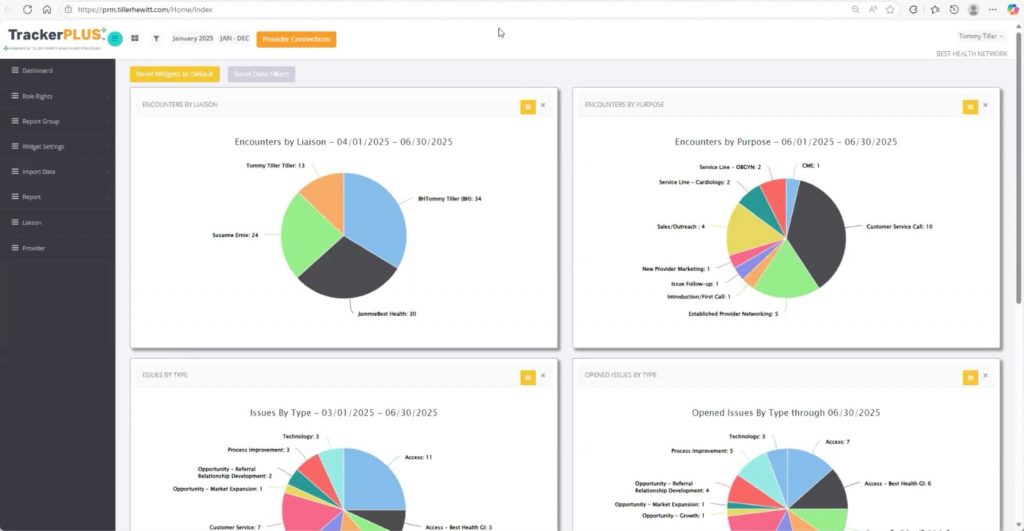
TrackerPLUS is particularly beneficial for healthcare organizations needing a dedicated PRM (Physician Relationship Management) tool to manage provider data, outreach, and onboarding. If you are coming from generic CRMs or manual spreadsheets, the biggest challenge is usually the lack of healthcare context. But thanks to TrackerPLUS’s healthcare-centric UI, it feels like a specialized step up, especially for physician liaisons who want better visibility into referral patterns without trying to force a square peg into a round hole on day one.
Its onboarding features help manage the critical first year of a provider’s tenure. You can schedule site visits, track family community integration, and automate task reminders for credentialing and IT setup. It also offers powerful data integration to track “leakage,” ensuring that when a new physician starts, the outreach team knows exactly which community practices to target for immediate referral growth.
I’ve seen TrackerPLUS used to bridge the gap between “signing the contract” and “seeing the first patient,” and it proved to be incredibly efficient at shortening the ramp-up period. The tool integrates with hospital EMR data, allowing for centralized communication and real-time ROI tracking that links liaison activity directly to service-line volume.
The platform also offers customizable dashboards and advanced reporting, providing clear insights into physician loyalty and market share. Its focus on compliance ensures that all physician interactions and expenditures are logged accurately, making it a reliable and audit-ready healthcare PRM.
Pros:
- Strategic Onboarding Workflows: Manages the 30-60-90 day ramp-up period to ensure new physicians hit productivity targets faster.
- 360° Provider View: Centralizes all physician data, including NPI details, referral history, issue logs, and outreach notes in one place.
- Issue Resolution Tracking: Automatically escalates provider grievances to the right department heads, ensuring rapid closure and improved retention.
- Mobile Field Access: Designed for liaisons on the move, allowing for quick data entry and “voice-to-text” notes between office visits.
Cons:
- Highly Specialized: The medical-heavy terminology makes it unsuitable for businesses outside of the healthcare sector.
- Data-Dependent: Requires consistent EMR or claims data imports to provide the most accurate ROI and referral insights.
Pricing:
Custom pricing based on organization size and data needs; a professional demo and proposal are required.
4. PlayMaker Health – Best for Post Acute Care
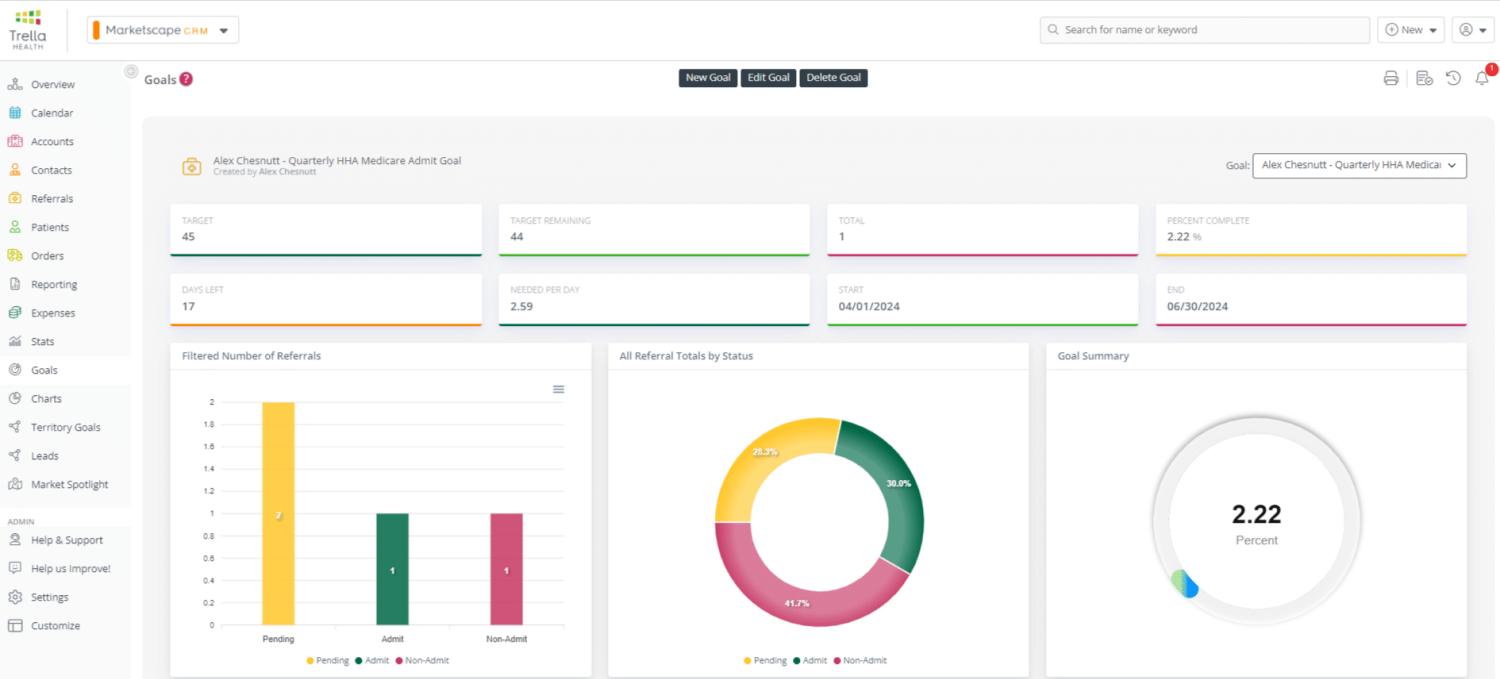
As a part of Trella Health, PlayMaker Health integrates seamlessly with comprehensive healthcare data, providing in-depth insights into referral patterns and market trends. The CRM offers robust features like real-time data tracking, detailed reporting, and an intuitive interface.
I found the customizable dashboards particularly helpful for monitoring key performance indicators.
PlayMaker Health is one of the most suitable CRMs for hospitals and post-acute care facilities because it provides actionable intelligence. What I liked most was the real-time data tracking feature, which made it easier to monitor patient referrals and status.
However, the initial setup was a bit daunting, and I had to spend considerable time getting everything configured properly. Despite these challenges, PlayMaker Health remains a suitable CRM for hospitals and post-acute care facilities.
Pros:
- Feature to search doctors and facilities by country and preference and view their insurance payor mix
- Seamlessly integrates with your EHR systems, ensuring consistent and updated patient data
- Customizable dashboards help in monitoring key performance indicators effectively
- Self-booking feature of doctor appointments, enhancing patient convenience and reducing administrative workload
Cons:
- The desktop version can be cumbersome and complex to learn
- Data is not in real-time, often showing information from months prior, which can lead to outdated insights and decisions.
Pricing:
Custom pricing.
5. Caspio – Best for Custom Cloud Applications
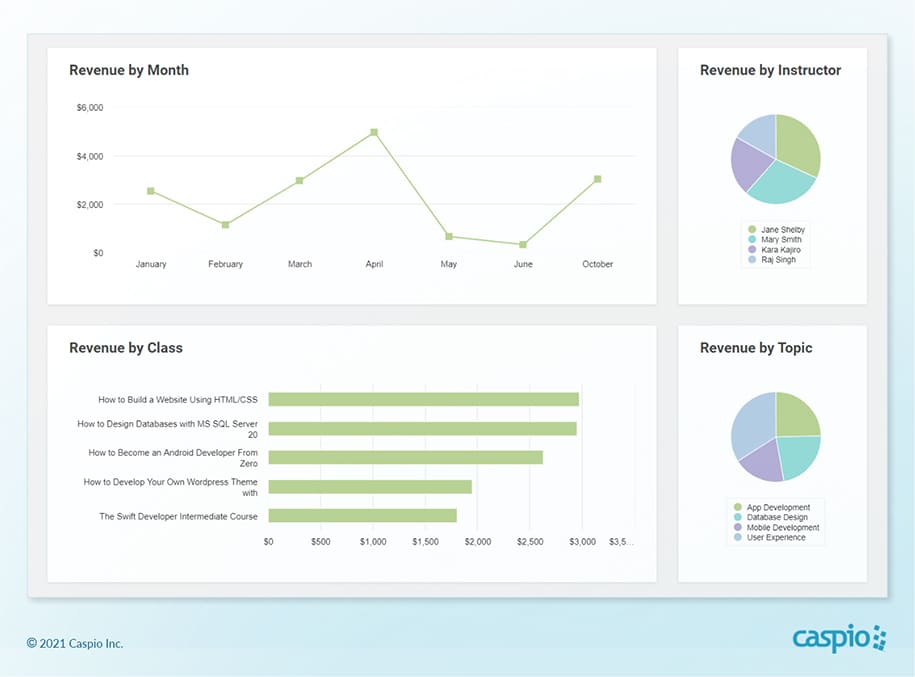
When I first used Caspio, I was amazed at how easy it was to create custom cloud applications without needing any coding skills. Caspio offers a powerful platform where you can build applications like CRMs, customer portals, and more.
What I liked the most was its drag-and-drop interface, which made the entire process intuitive and seamless. It also provides pre-built templates, allowing you to get started quickly.
In my experience, Caspio is particularly effective for healthcare CRM needs, as it ensures HIPAA compliance and integrates smoothly with various healthcare tools. This makes it an excellent choice for managing patient data securely and efficiently.
The platform’s ability to integrate with other healthcare tools and systems ensures a seamless workflow, making it easier to handle patient records, appointments, and communications.
Pros:
- Linked database structures allow the continuous addition of new data pages, enhancing flexibility
- Drag-and-drop application builder for easy customization
- Wizards simplify the creation of forms, tables, and data pages
- Seamless integration with popular tools like Zapier, Salesforce, and Google Drive
Cons:
- Small interface size leads to excessive scrolling, making it harder to view multiple fields at once
- Customization options can be overwhelming for new users
Pricing:
Starts at $39/user/month.
6. Pipedrive – Best for Sales-Focused Teams
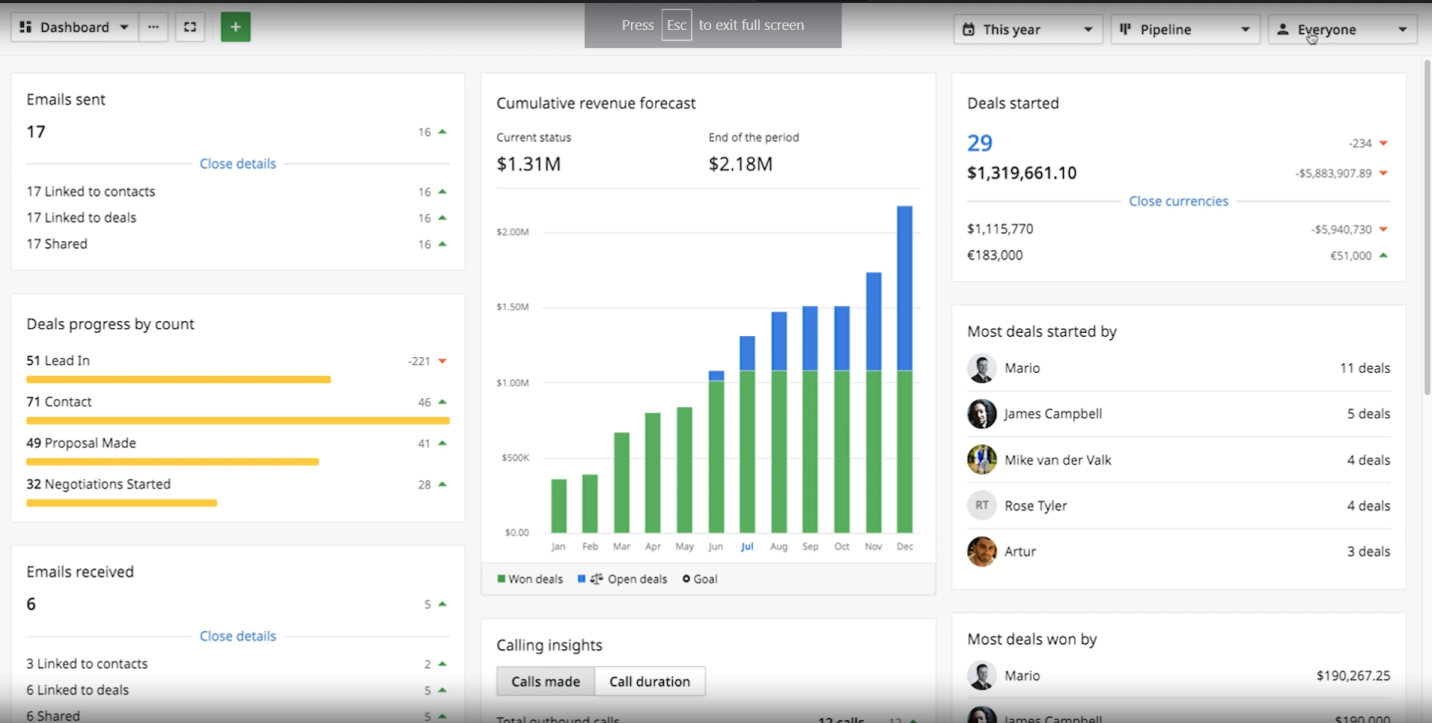
When I started using Pipedrive, I immediately noticed how intuitive its sales pipeline management is. The visual sales pipeline is simple to use, making it easy to track deals at every stage. One feature that stood out was the customizable pipelines; I could tailor them to match my sales process perfectly.
The integrations with tools like Google Workspace, Trello, and Slack streamlined my workflow. In my experience, Caspio CRM stands out as one of the best healthcare CRMs, especially for managing patient data and appointments.
Its HIPAA-compliant features ensure data security, a critical aspect in the medical field. The platform’s customizability allows healthcare providers to tailor it to their needs, enhancing efficiency and patient care.
Pros:
- Visual sales pipeline for easy deal tracking
- The quote management feature notifies users about pending quotes and keeps track of previously approved deals
- The machine learning-powered sales assistant to optimize sales strategies by offering intelligent insights and recommendations
- The autofill contact info feature saves time by automatically adding contact details
Cons:
- Downloading leads can be challenging because it requires precise settings, often leading to delays
- The limited customization options for campaigns can hinder flexibility
Pricing:
Starts at $14/user/month.
7. FreeAgent CRM – Best for Team Management
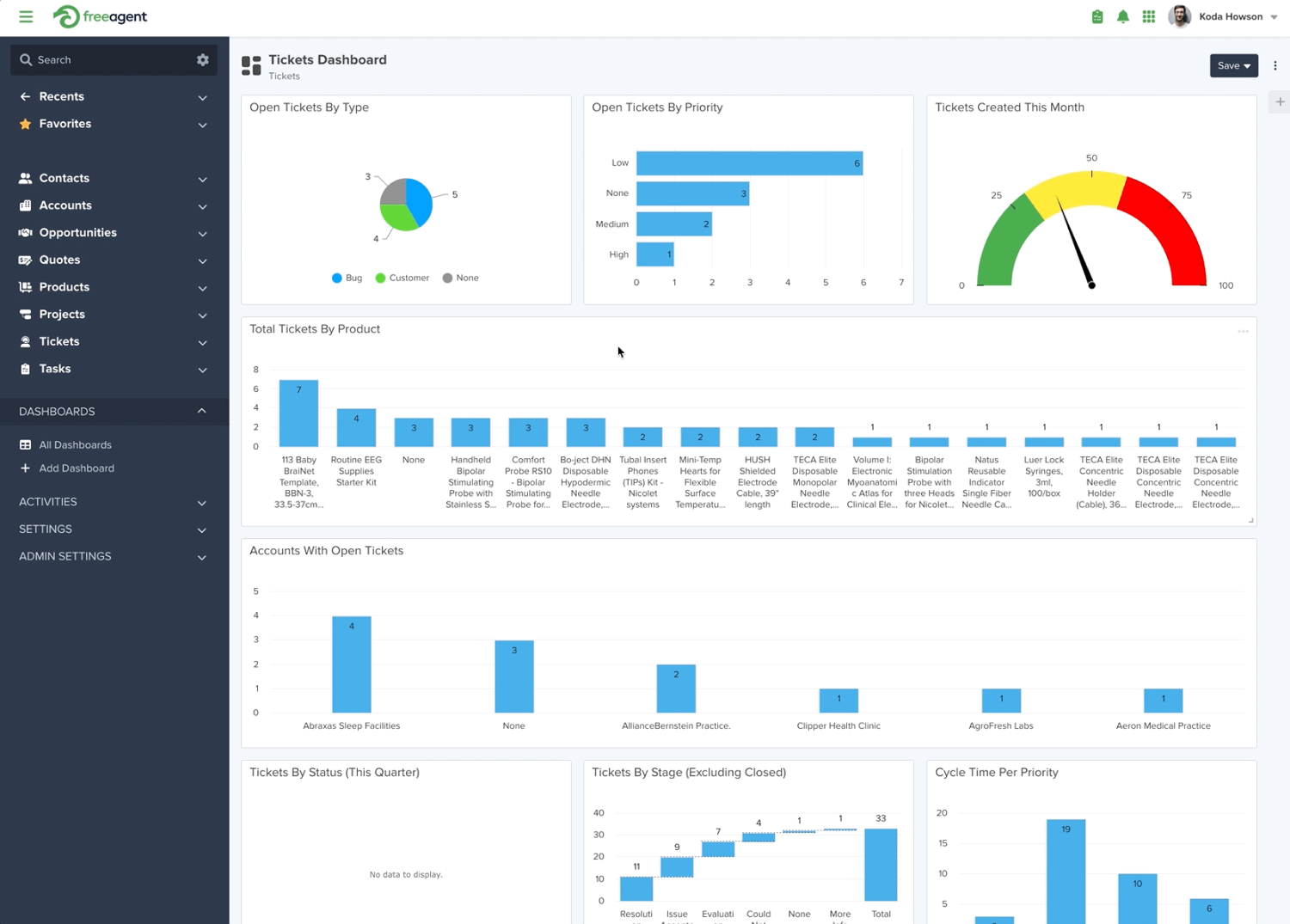
I found FreeAgent CRM to be a fantastic tool for team management. Its user-friendly interface made it easy to assign tasks and track progress. I particularly enjoyed the customizable dashboards that provided a clear overview of the team’s performance.
Additionally, the tool integrates seamlessly with popular apps like Google Workspace and Slack, enhancing our productivity. I also noticed that FreeAgent CRM excels as a healthcare CRM, offering features tailored for patient management and compliance tracking.
The tool’s patient management system effortlessly tracks appointments, medical histories, and follow-ups. I appreciated the HIPAA-compliant data storage, which ensures patient confidentiality.
Pros:
- Customizable dashboards and layouts for tailored team views
- Automatic creation of dividend vouchers, saving time and ensuring accurate financial records
- Amazing phone, email, and SMS features streamline communication and improve customer engagement
- Perfect for customer retention, opportunity revenue tracking, and forecasting, enhancing overall business growth
Cons:
- Some users find the initial setup complex and time-consuming
- Occasional glitches occur with third-party integrations
Pricing:
Starts at $11/user/month.
8. HubSpot – Best for Centralizing Sales, Marketing, and Support Operations
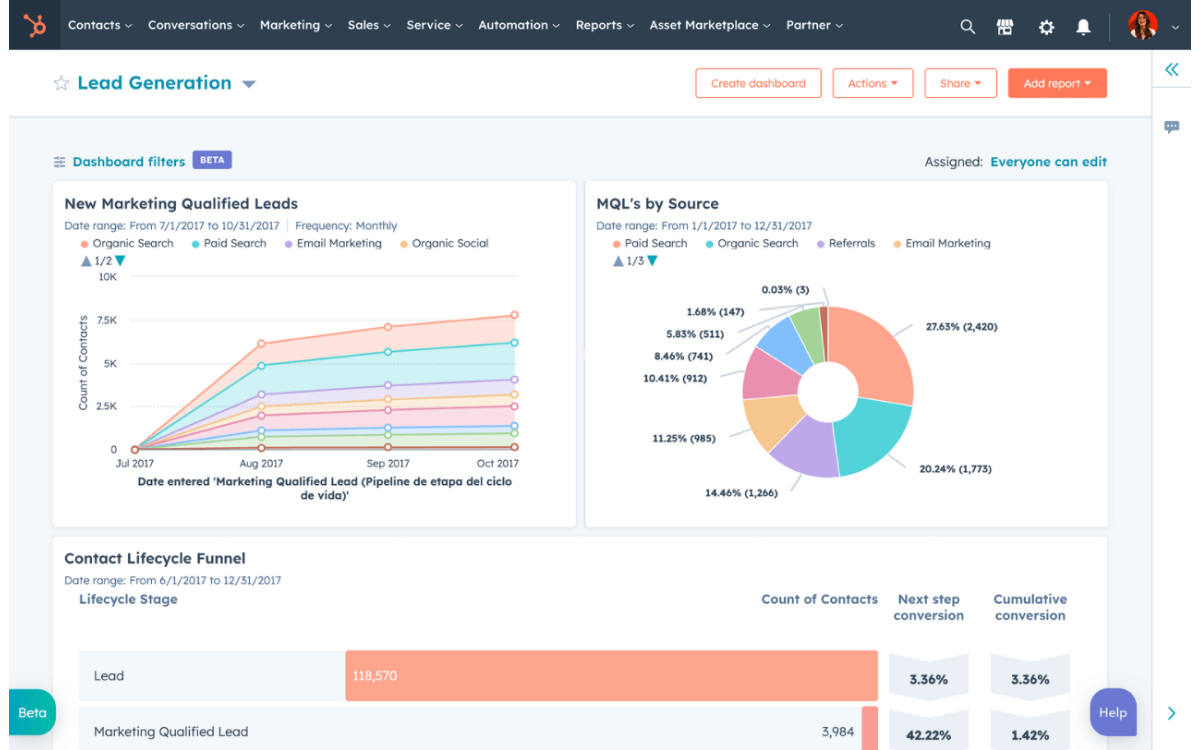
HubSpot CRM is a powerful platform that consolidates all sales, marketing, and support operations into one centralized hub. I appreciated its seamless integration with tools like Gmail, Outlook, and even Slack, which made communication effortless.
For healthcare organizations, HubSpot offers features tailored to their needs, such as patient relationship management and compliance tools. Its user-friendly interface and extensive automation capabilities help streamline workflows, ensuring you spend more time on patient care and less on administrative tasks.
The analytics provide deep insights into patient engagement, which helps in improving care quality and operational efficiency. If your focus is outreach and engagement, HubSpot also works well as a CRM for healthcare marketing, especially when you want campaigns, follow-ups, and lead tracking in one place.
Pros:
- Features for tracking deals and managing the lead lifecycle to streamline your sales process efficiently
- Seamless integration with HubSpot tools like Marketing Hub and Sales Hub for creating targeted campaigns and nurturing prospects effectively
- Custom fields to gather unlimited responses, enhancing data collection and personalization
- Instant insights with real-time analytics for making data-driven decisions
Cons:
- Some users find the initial setup process to be complicated and time-consuming
- It doesn’t offer extensive reporting features or A/B testing options
Pricing:
Starts at $15/user/month.
Evaluation Criteria
The evaluation of products or tools chosen for this article follows an unbiased, systematic approach that ensures a fair, insightful, and well-rounded review. This method employs six key factors:
- User Reviews / Ratings: Direct experiences from users, including ratings and feedback from reputable sites, provide a ground-level perspective. This feedback is critical in understanding overall satisfaction and potential problems.
- Essential Features & Functionality: The value of a product is ascertained by its core features and overall functionality. Through an in-depth exploration of these aspects, the practical usefulness and effectiveness of the tools are carefully evaluated.
- Ease of Use: The user-friendliness of a product or service is assessed, focusing on the design, interface, and navigation. This ensures a positive experience for users of all levels of expertise.
- Customer Support: The quality of customer support is examined, taking into account its efficiency and how well it supports users in different phases – setting up, addressing concerns, and resolving operational issues.
- Value for Money: Value for money is evaluated by comparing the quality, performance, and features. The goal is to help the reader understand whether they would be getting their money’s worth.
- Personal Experience / Experts’ Opinions: This part of the evaluation criteria draws insightful observations from the personal experience of the writer and the opinions of industry experts.
Which Is the Best CRM for a Hospital?
Choosing the best CRM for the healthcare industry is essential for improving patient relationships, streamlining operations, and boosting efficiency. In hospitals and clinics, the friction usually shows up in small ways—missed reminders, scattered patient notes, staff switching between systems, and constant worry about data privacy. The right healthcare CRM helps reduce these headaches by keeping communication and workflows organized.
The ideal healthcare CRM should offer features like patient management, appointment scheduling, follow-up reminders, and seamless integration with other tools like EHR systems and email marketing platforms. Additionally, it should provide powerful analytics and reporting to help make data-driven decisions.
After exploring various options, I found that BIGContacts stands out as the best CRM for the healthcare industry. You can sign up for free to get a comprehensive suite of features tailored to healthcare, including detailed patient profiles, automated follow-ups, and efficient task management.
Its user-friendly interface and powerful automation capabilities make it an excellent choice for managing healthcare operations effectively.
FREE. All Features. FOREVER!
Try our Forever FREE account with all premium features!