

I’ve worked with logistics teams long enough to know this: when updates are late, and handoffs are messy, customers lose patience fast. That’s why a CRM for logistics matters.
PwC’s Customer Experience Survey found that 52% of consumers stopped buying from a brand after a bad experience, so even one poor delivery update or slow response can quietly push customers away.
The logistics industry is evolving quickly, and the best operators are using CRMs to bring order to the chaos: fewer communication gaps, cleaner workflows across sales and ops, and better visibility from pickup to delivery. In this updated list for 2026, I’ll share the 6 best CRMs to help you run a more reliable, customer-first logistics operation.
Why Your Logistics Business Needs a CRM
Running a logistics business means juggling a lot—carriers, orders, brokers, drivers, and constant customer updates. Without a central CRM, things can easily slip through the cracks:
- Shipment statuses get lost in emails and messages
- Leads and quotes aren’t tracked consistently
- Team communication breaks down
- Customers call for updates that you don’t have in your system
But with a logistics CRM, you can:
- Track shipments and deals in one place
- Automate routine updates and emails
- Keep all customer interactions organized
- Improve team collaboration and speed up response times
- Make quicker, smarter decisions with data at your fingertips
No wonder so many logistics companies are making the switch—these CRMs are built for the unique challenges you face.
Best CRM Solutions for Logistics in 2026
Below are top‑rated CRM platforms that match different business needs in the logistics space — from small operators to growing freight and supply chain teams.
| CRM | Best for | Pricing |
|---|---|---|
| BIGContacts | Contact Management & Email Marketing | Free for growing teams. Paid plan starts at $9.99/month |
| Sage CRM | Sales Pipeline Management | Custom pricing. |
| BlueYonder | AI-Powered Supply Chain Optimization | Custom pricing. |
| Freshsales | Deal Management | Starts at $10.7/user/month. |
| Hubspot | Centralizing Sales, Marketing, & Support Operations | Starts at $20/user/month. |
| Zoho | Omnichannel Engagement | Starts at $15.4/user/month. |
1. BIGContacts – Best for Contact Management & Email Marketing for Growing Businesses
As someone who has used BIGContacts in the logistics industry, I can confidently say it’s a valuable tool. It helped me manage contacts effortlessly and automate email marketing campaigns, making customer outreach a breeze.
I loved how the platform allowed me to keep all my customer information in one place, track my interactions, and even send personalized emails. I could also set reminders for follow-ups, track deals in the sales pipeline, and manage my appointments.
I found it especially helpful for tracking shipments, managing delivery schedules, and keeping everyone in the loop with automated email updates. It’s a logistics CRM that truly simplifies communication and helps you stay on top of everything.
Pros:
- Contact profiles that include essential details like phone numbers, email addresses, locations, and job titles, giving you a complete 360° view of each contact
- Automated email marketing to create targeted email campaigns and keep the customers informed
- User-friendly sales pipeline management that simplifies the tracking of sales and leads to monitoring progress efficiently and closing deals faster
- Task Management features to stay on top of deadlines and deliveries
- Awesome human support 24/7 via phone, chat, and knowledge base
- The interface is user-friendly and helps in navigating easily
Cons:
- No downloadable or on-premise version
- No dedicated account manager for the free plan, unlike the paid
Pricing:
A free plan is available for growing teams. Paid plan starts at $9.99/month
2. Sage CRM – Best for Sales Pipeline Management
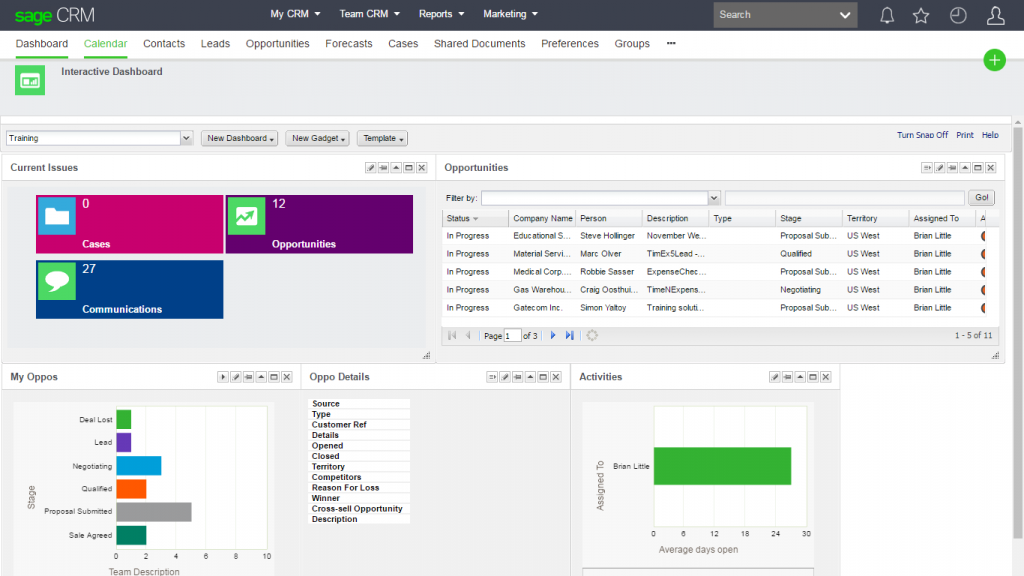
Image Source: Greytrix
I implemented Sage CRM, which truly transformed how I managed our operations. The ability to track every client interaction, from the initial quote to the final delivery, was invaluable. I could monitor shipments in real time, manage customer inquiries efficiently, and even automate critical tasks like sending delivery updates.
I found Sage CRM to be a highly efficient tool for managing sales pipelines, especially regarding monitoring leads and closing deals. Sage CRM is handy for the logistics industry, where keeping track of clients, shipments, and vendors is essential.
As a CRM for transportation, it helped me optimize routes, manage the fleet, and track key performance indicators like on-time delivery rates. Having all this information centralized in one platform made decision-making easier and improved our overall efficiency.
Pros:
- Sales force automation for automated lead assignments and follow-ups to ensure you never miss an opportunity
- Marketing Campaign Management to send targeted emails to nurture leads and build stronger customer relationships
- Comprehensive sales tracking to provide real-time visibility into the pipeline to identify opportunities and close deals faster
- Integration with accounting systems that offer automated invoice creation, payment processing, and reconciliation, saving time and ensuring accuracy
Cons:
- Some users found the customization options to be somewhat limited, especially for complex workflows
- The user interface felt outdated compared to modern CRMs
Pricing:
Custom pricing.
3. BlueYonder – Best for AI-Powered Supply Chain Optimization
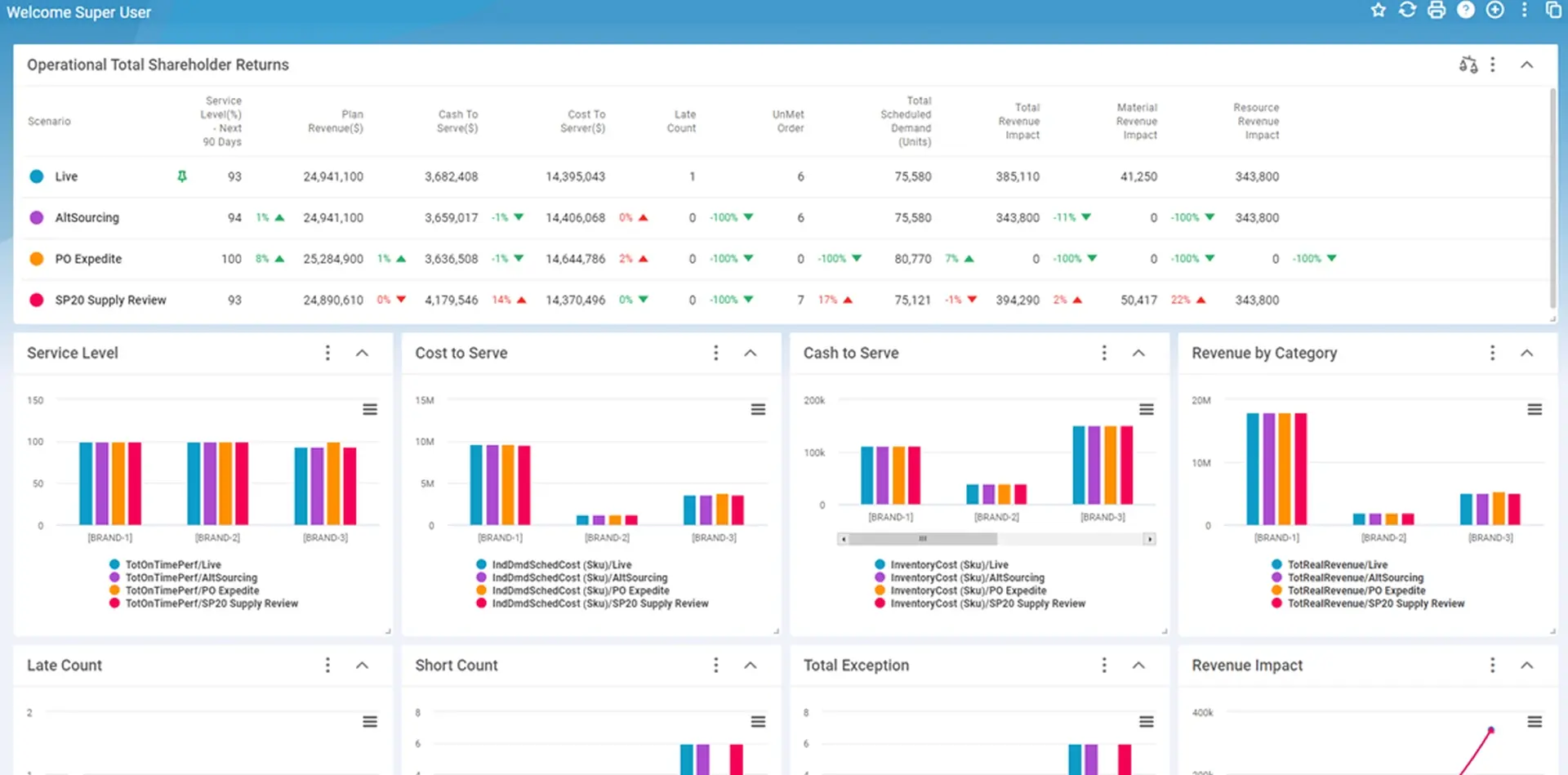
Image source: BlueYonder
When I first implemented BlueYonder, I was impressed by its ability to analyze massive amounts of data and provide actionable insights. It offered predictive analytics, helping me anticipate disruptions and optimize routes and schedules.
What really stood out was its usefulness as a CRM for the trucking business. Instead of reacting to delays and stockouts, I proactively adjusted routes to avoid weather events, optimized inventory levels based on predicted demand spikes, and even identified potential supplier issues weeks in advance.
BlueYonder’s control tower view gave me a granular, real-time insight into every shipment, warehouse, and transportation leg. For logistics, it was great for managing inventory, improving demand forecasting, and streamlining warehouse operations, all while maintaining seamless communication with vendors and clients.
Pros:
- AI-driven predictive analytics to enhance forecasting by anticipating supply chain disruptions and enabling more proactive decision-making
- Transportation Management feature to plan and optimize routes, manage carriers, and track shipments in real-time
- Customizable dashboards for users to tailor views and metrics according to their specific operational needs
- Seamless vendor integration for smoother communication and collaboration, helping to streamline the entire supply chain process from procurement to delivery
Cons:
- Occasional data integration challenges with other systems, which can complicate the implementation process
- BlueYonder is a premium solution with a high price tag, making it less accessible to smaller businesses
Pricing:
Custom pricing.
4. Freshsales – Best for Deal Management
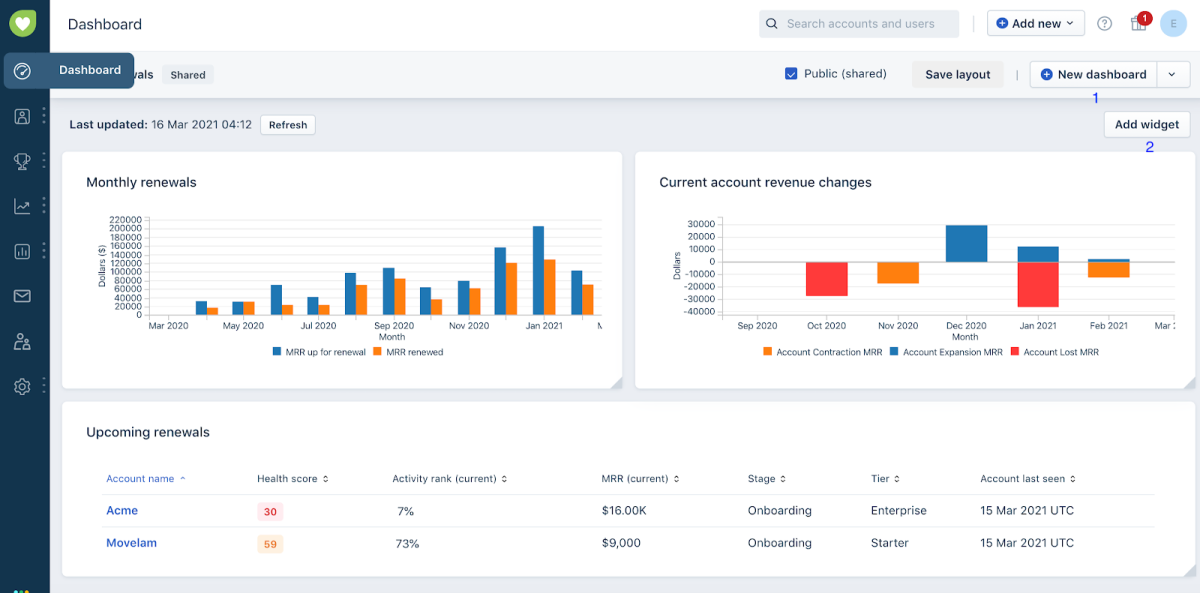
Image Source: Freshworks
Freshsales surprised me with its ability to make deal management a smooth, almost effortless process. It wasn’t just another CRM—it felt like having an extra team member focused on moving deals forward.
Freshsales offered me detailed insights into every stage of the sales pipeline, which made it easy to prioritize tasks and close deals faster. I especially loved the AI-powered lead scoring, which identified the best prospects effortlessly.
For the logistics industry, where managing multiple contacts, shipments, and sales can get complex, Freshsales was truly helpful. Its Transportation CRM capabilities helped to track shipments and manage customer interactions seamlessly. Automated workflows helped me reduce manual tasks, which is vital in logistics, where timing and accuracy are critical.
Pros:
- Visual Sales Pipeline to easily track deals and identify bottlenecks in the sales process
- AI-driven leads scoring to highlight top leads to help close deals faster
- Integrated phone and email tracking ensures all communications are in one place, making follow-ups faster
- Workflow automation to automate repetitive tasks and free up your team’s time to focus on selling
Cons:
- Initial setup requires time, especially for customizing to specific needs
- Some users have experienced occasional slowdowns or performance issues
Pricing:
Starts at $10.7/user/month.
5. Hubspot – Centralizing Sales, Marketing, & Support Operations
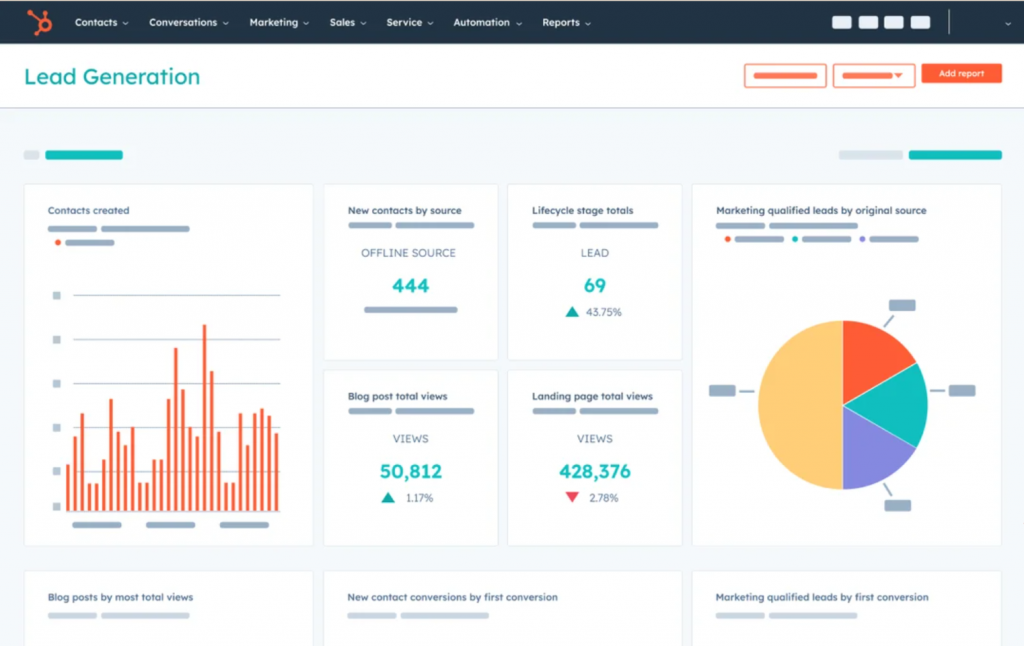
HubSpot is an all-in-one CRM that empowers businesses to connect their sales, marketing, and customer service efforts. It provides a unified platform for growth, which is especially valuable in the fast-paced logistics industry.
I was initially drawn to HubSpot for its user-friendly interface and comprehensive features. Still, I quickly discovered its true power lay in its ability to streamline our entire logistics operation. From managing customer interactions, tracking shipments, nurturing leads, and automating marketing campaigns, HubSpot became the central hub for our business.
We could set up workflows to trigger notifications for delivery updates, track shipments in real time, and even manage customer service inquiries seamlessly. HubSpot proved to be an invaluable CRM in supply chain management.
Pros:
- Visual workflow builder to automate repetitive marketing tasks, such as lead nurturing email sequences, internal notifications, and data updates
- Lead capture tools like customizable forms, pop-up CTAs to landing pages, and live chat to attract and capture leads
- Social media management to schedule and publish content across multiple social media platforms directly from HubSpot
- Sales pipeline management to track deals and opportunities from initial contact to close and leverage AI-powered insights to prioritize sales activities and improve win rates
Cons:
- While HubSpot provides a variety of templates for emails, landing pages, etc., the extent of customization might be restrictive
- Exporting or migrating your data can be complex and time-consuming
Pricing:
Starts at $20/user/month.
6. Zoho – Best for Omnichannel Engagement
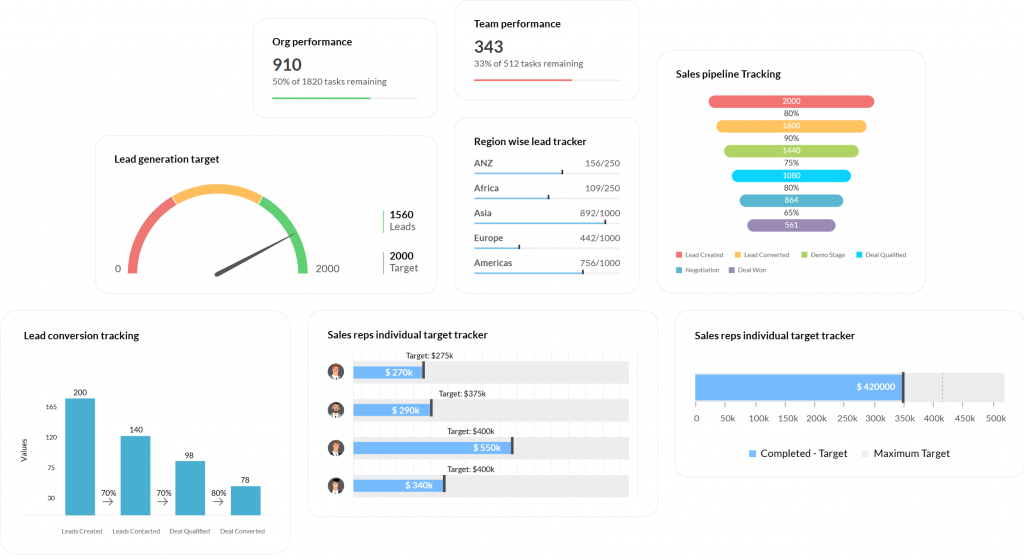
Image Source: Zoho
When I used Zoho CRM, I found its omnichannel capabilities helpful, especially for industries like logistics that require constant coordination across multiple communication channels.
Zoho helped me manage emails, social media interactions, phone calls, and even live chats from a single dashboard, keeping everything organized. In the logistics sector, where timely updates and real-time communication are crucial, Zoho helped streamline everything—from tracking shipments to addressing customer inquiries.
Plus, its automation tools handled a lot of the repetitive tasks, letting me focus on strategic decisions. It’s no wonder it’s considered one of the best CRM for logistics. Zoho’s inventory management, route optimization, and shipment tracking were invaluable for efficiently managing day-to-day logistics operations.
Pros:
- Instant notifications for email, chat, and social media to never miss an important update or customer inquiry
- Easy third-party integrations with tools like Google Drive and Slack to boost team collaboration and file sharing
- Sales Automation to automate repetitive tasks like lead assignments and follow-up emails to free up the team’s time
- Fully customizable dashboards to let you track key metrics and tailor views to fit specific business goals
Cons:
- Integrating Zoho CRM with certain third-party applications can be complex and may require technical expertise
- Customer support could be slow during peak hours
Pricing:
Starts at $15.4/user/month.
My Top 3 Picks CRM for Logistics Industry: A Quick Overview
Still not sure which CRM is best for simplifying your logistics operations? Here are my top 3 contenders to consider:
1. BIGContacts
Ideal for startups and small businesses in the logistics industry, BIGContacts stands out when it comes to contact management and email marketing. You can efficiently organize your contacts (customers, suppliers, partners), segment them for targeted campaigns, and nurture relationships through automated email sequences.
2. BlueYonder
If you’re looking for a CRM that leverages the power of AI to optimize your supply chain, BlueYonder is a compelling choice. Its sophisticated algorithms can help you forecast demand, improve warehouse efficiency, and optimize delivery routes. While BlueYonder offers powerful solutions, keep in mind that implementing its advanced features may require a significant investment of time and resources.
3. HubSpot
A popular choice across various industries, HubSpot excels at centralizing your sales, marketing, and customer support operations. You can manage your entire customer journey from a single platform, track interactions, and automate workflows. While HubSpot offers a free version, accessing its more advanced features, which might be essential for complex logistics needs, requires upgrading to a paid plan.
Key Features to Look for in Logistics CRM Software
When selecting a logistics CRM, it’s important to choose one that meets your business’s unique needs. Here are the essential features to look for:
1. Centralized Contact & Deal Management
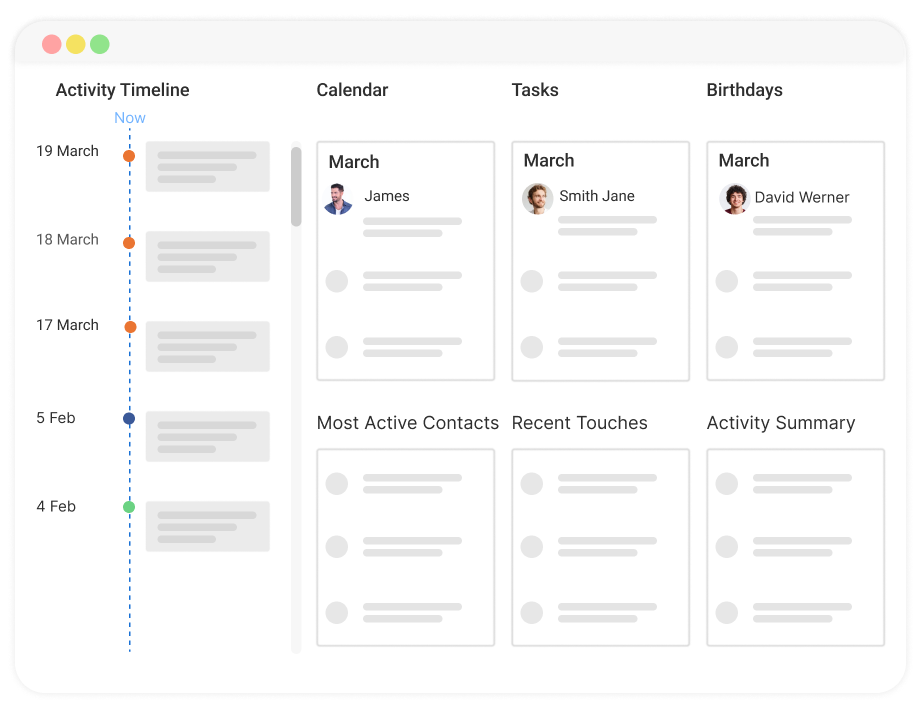
Having all customer, broker, carrier, and partner details in one place is really helpful. With a centralized system, you can easily access past communications, deal histories, and important notes, ensuring you never lose context or important information.
2. Automated Communication
Automating routine communications is a huge time-saver. Set up triggers for delivery updates, follow-up emails, and shipment reminders. This keeps your customers informed without the need for manual effort, reducing the chances of missed updates.
3. Workflow Automation
Logistics involves a lot of repetitive tasks. Automating workflows—like order processing, invoicing, and customer follow-ups—can help save time and minimize errors. It frees up your team to focus on higher-priority tasks, while ensuring that the routine stuff gets done consistently.
4. Real-Time Visibility
You need to stay on top of every shipment and deal, from the moment it’s processed to its final delivery. A CRM with real-time visibility into your pipeline and shipment statuses allows you to proactively spot bottlenecks, make adjustments, and keep things moving smoothly.
5. Integration with Operations Tools
Your CRM should easily integrate with your existing tools, whether it’s a freight management system, TMS, ERP, or other shipment software. This ensures that your CRM can pull in data from other platforms, keeping everything synced and up-to-date without double entry or confusion.
With these features, your logistics CRM will help streamline operations, improve communication, and enhance customer satisfaction.
How to Choose the Right CRM for Your Logistics Business
Selecting the perfect CRM for your logistics business doesn’t have to be overwhelming. Here’s a simple, step-by-step approach to help you make the right choice:
1. Define Your Goals
Before you dive into CRM options, think about what you want to achieve. Are you aiming to improve communication with customers? Do you need to track shipments in real-time or automate routine tasks? Having clear goals will guide your decision-making and help you identify the features that matter most.
2. List Must-Have Features
Make a list of the features that are non-negotiable for your business. For example, if real-time shipment tracking or integration with your Transportation Management System (TMS) is crucial, prioritize CRMs that support these features. Focus on tools that specifically address the challenges you face in logistics to ensure a more tailored solution.
3. Evaluate Ease of Use
A CRM with a steep learning curve can cause frustration and low adoption among your team. Look for a solution that is intuitive and user-friendly. The best CRM should make daily tasks easier, not more complicated. Take note of its interface and navigation to ensure it fits well with your team’s workflow.
4. Check Future Scalability
As your business grows, your CRM should be able to scale with you. Consider whether the system can handle increasing shipments, more complex workflows, or a growing team. Avoid choosing a CRM that you’ll quickly outgrow, as this can lead to unnecessary disruptions and extra costs down the line. Choose a solution that can grow alongside your business.
4. Try Before You Buy
Most CRM providers offer free trials or demos, and this is your chance to test the software in real-world scenarios. During the trial, simulate typical workflows, such as managing shipments or communicating with customers, to see how the CRM performs. Make sure it integrates smoothly with your current systems and that it meets your team’s needs before committing to a purchase.
Improve Relations with Customers & Suppliers With Logistics CRM
Choosing the right Logistics CRM can significantly boost your ROI. An effective CRM streamlines operations, improves communication, and enhances customer satisfaction, all of which contribute to increased profitability.
By centralizing your data and automating tasks, you can optimize routes, reduce delivery times, and minimize errors. Real-time tracking and data analysis provide valuable insights to identify bottlenecks and improve efficiency.
If you’re searching for a user-friendly CRM with robust features, BIGContacts is a strong contender. It offers seamless integration, customizable workflows, and a forever-free plan, making it a valuable asset for businesses of all sizes in the logistics industry.
Frequently Asked Questions

What are the benefits of logistics CRM?
A Transportation CRM helps you streamline operations by centralizing customer interactions, tracking shipments, and managing orders efficiently. It improves communication between teams, reduces delays, and provides real-time updates on deliveries. Plus, you can optimize routes, cut costs, and enhance customer satisfaction, making your logistics process smoother and more reliable.
How does customer relationship management in logistics work?
Customer relationship management in logistics helps you manage interactions with clients and streamline operations like tracking shipments and managing orders. By using CRM in supply chain management, you can improve communication, handle customer inquiries efficiently, and ensure timely deliveries. It also helps optimize processes, leading to better customer satisfaction and business growth.
How does customer relationship management in logistics work?
Customer relationship management in logistics helps you manage interactions with clients and streamline operations like tracking shipments and managing orders. By using CRM in supply chain management, you can improve communication, handle customer inquiries efficiently, and ensure timely deliveries. It also helps optimize processes, leading to better customer satisfaction and business growth.
How to choose the best logistics CRM?
To choose the best logistics CRM, start by identifying your specific needs, like shipment tracking and inventory management. Look for user-friendly interfaces and integration with existing tools. Also, consider features like automation and reporting. Finally, check for scalability to ensure the CRM grows with your business, especially if you need a strong CRM shipping solution.
FREE. All Features. FOREVER!
Try our Forever FREE account with all premium features!